Verwirrung mit Zahlen: Wann sie auf Dyskalkulie hinweisen kann
Verwirrung mit Zahlen kann sehr persönlich wirken: Preise erneut lesen, Ziffern vertauschen, beim Zählen den Platz verlieren oder bei einer einfachen Rechnung erstarren. Wenn dieses Muster anhält und Schule, Arbeit, Geld, Zeit, Orientierung oder Selbstvertrauen beeinflusst, lohnt sich ein Blick auf Dyskalkulie, eine Lernbesonderheit bei Zahlensinn, Rechnen und mathematischem Denken. dyscalculia screening resource can help organize observations before a formal assessment.
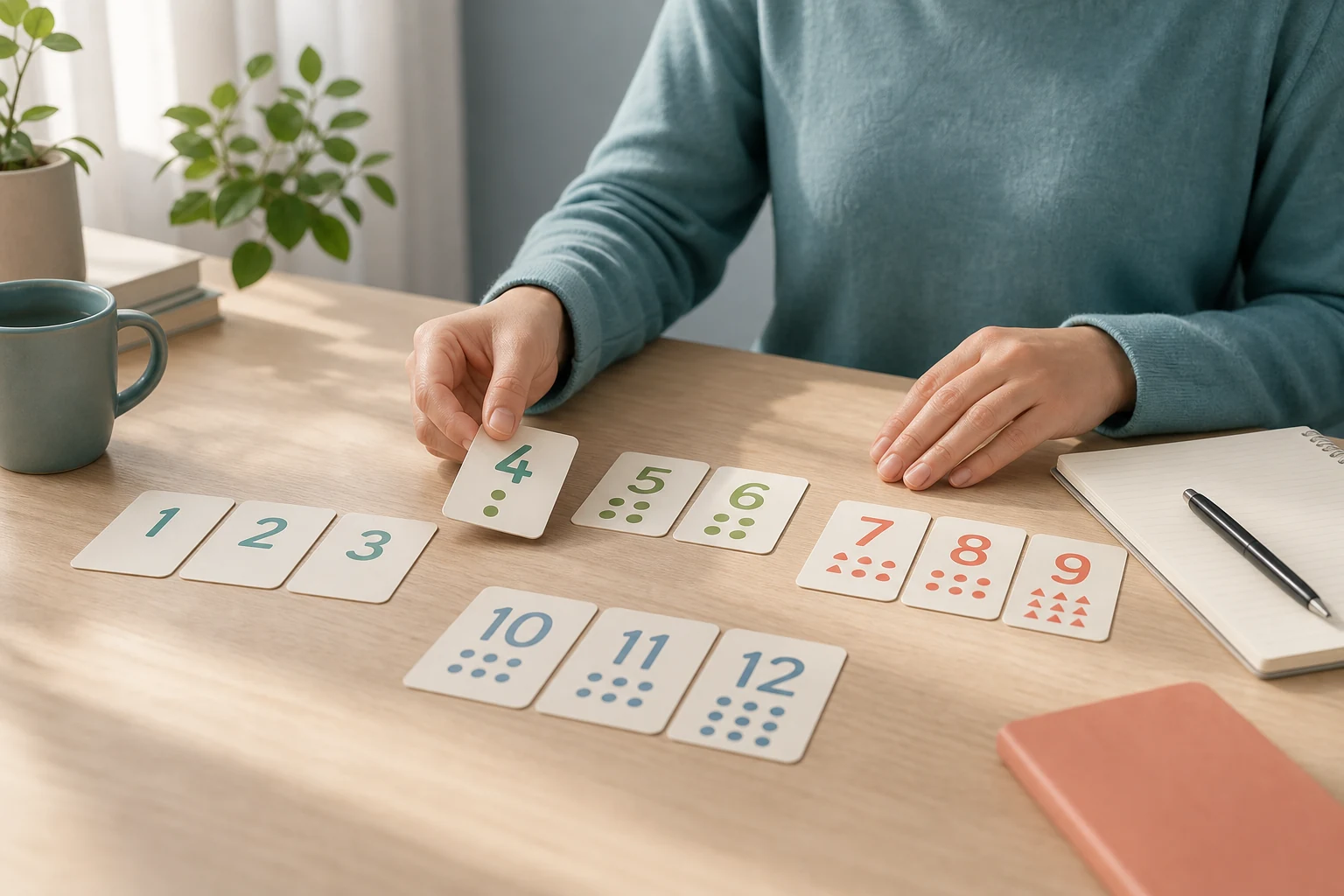
What Confusion With Numbers Can Mean
This difficulty is not one single mistake. It may involve reversed digits, lost steps, slow recall, trouble with time, money, measurement, estimation or quantity comparison. The useful question is which number task breaks down, how often it happens and in what setting.
Signs That May Fit Dyscalculia Symptoms
In children, signs often appear in counting, numerals, quantities, number lines and basic facts. In teens and adults, they may appear as daily friction with schedules, change, recipes, budgets, left and right, graphs, measurements and forms. Repeated problems can lead to avoidance, embarrassment and math anxiety.

Is It Number Dyslexia or Dyscalculia?
The nickname number dyslexia is common, but dyslexia mainly concerns reading and language. Dyscalculia is more precise when the main difficulty is number sense, calculation and mathematical reasoning. Support may include visual math tools, explicit place-value teaching, number lines, step routines and accommodations for time or mental math.
Why Confusion With Numbers Happens
Math combines symbol recognition, working memory, quantity understanding, fact recall, operation choice, sequence tracking and reasonableness checks. If one process is weak, the whole task can feel unstable. Dyscalculia may co-occur with ADHD, dyslexia, coordination differences or autism, but it is not simply a form of autism. New or sudden changes should be discussed with a health professional.
What To Track Before Seeking an Assessment
Before a professional assessment, track situations for two to four weeks rather than trying to prove a conclusion.
Use this checklist for two to four weeks:
- What number task was difficult: counting, time, money, measurement, directions, math facts, word problems, charts or forms.
- What happened: digit reversal, skipped step, lost place, slow recall, guessed answer, avoided task or became overwhelmed.
- How often it happened and whether it appeared across home, school, work or daily errands.
- What helped: number line, calculator, written steps, visual grouping, extra time, quiet setting or verbal explanation.
- What did not help: more repetition, speed drills, mental math pressure or copying procedures without meaning.
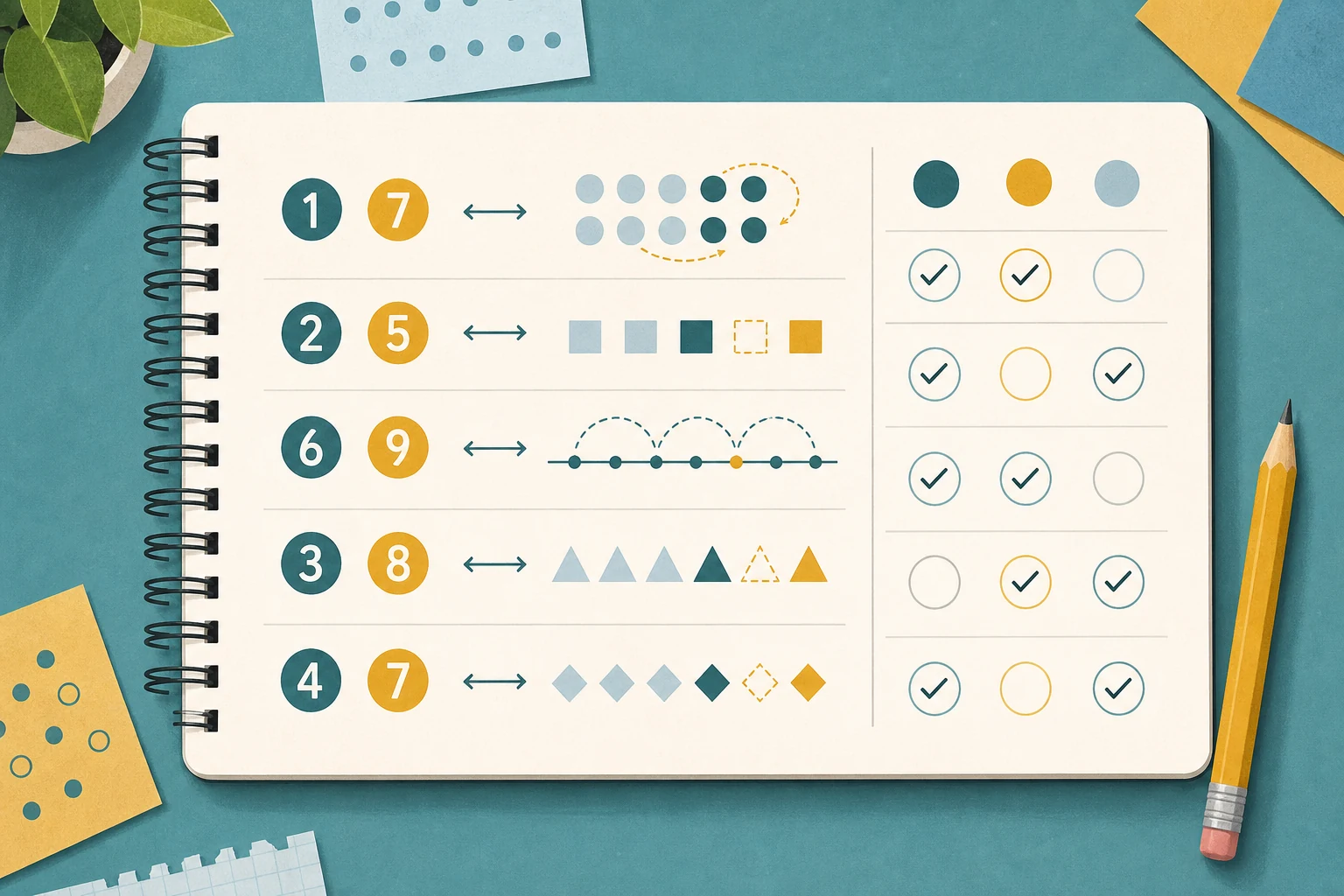
How To Respond at Home, School, or Work
Support should reduce cognitive load and make number relationships visible. Useful tools include manipulatives, number lines, visual grouping, graph paper, formula cards, worked examples, calculator access, extra time, calendar alerts, budgeting apps and double-checking important numbers. free dyscalculia test information can support reflection but does not replace professional evaluation.
A Calm Next Step for Confused With Numbers
Start small: write down the situations that cause the most trouble, note what helps and look for patterns across several weeks. If the pattern is long-standing, affects learning or daily tasks, or causes distress, consider speaking with a qualified professional. number learning difference screener can help prepare better questions.

FAQ
What is it called when you get confused with numbers?
Persistent confusion with numbers may be associated with dyscalculia, a learning difference affecting number sense, calculation and mathematical reasoning.
Why do I get so confused with numbers?
Possible reasons include weak number sense, working-memory load, instruction gaps, math anxiety, attention differences, language processing issues or dyscalculia.
What are 10 symptoms of dyscalculia?
Common signs include trouble counting, recognizing quantities, remembering facts, understanding place value, reading clocks, handling money, estimating, following multi-step calculations, interpreting graphs or measurements and intense math anxiety.
Is dyscalculia real?
Yes. Dyscalculia is a real math-related learning difference and is not a sign of low intelligence or poor effort.
Is dyscalculia a form of autism?
No. Dyscalculia and autism are different, although they can co-occur.
Can you be dyslexic with numbers and not letters?
If numbers are the main challenge and word reading is not, dyscalculia is usually the more precise term.
How do you get assessed for dyscalculia?
Assessment reviews learning history, math achievement, number skills and other factors that could affect learning.