What Causes Dyscalculia: Inside the Science of Math Learning
Have you ever wondered why some people find math almost impossible, no matter how hard they study? If you or your child struggle with numbers, you are not alone, and it is not a matter of effort or intelligence. For years, educators and scientists have worked to understand what causes dyscalculia, a specific learning disability that affects how the brain processes mathematical concepts. Perhaps you have felt the frustration of staring at a simple bill or watching your child struggle with basic addition. Understanding the root of these challenges is the first step toward finding clarity and confidence. In this guide, we will explore the neurological and genetic factors behind these struggles. You can also explore our dyscalculia test online to begin your own journey of self-discovery and better understand your unique cognitive profile.

The Neurological Map: How the Brain Processes Numbers
To understand what causes dyscalculia, we must look to the parietal lobe, the brain's center for "number sense." Science confirms that math ability isn't just a learned skill; it relies on specific neural pathways. In dyscalculic brains, these pathways function differently, making it difficult to instinctively grasp that four apples correspond to the number "4."
The Role of the Parietal Lobe and Intraparietal Sulcus
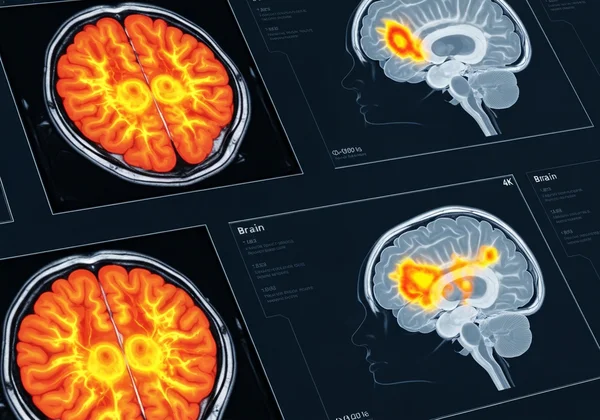
Within the parietal lobe sits the intraparietal sulcus (IPS), a structure acting as the brain's "math computer." fMRI scans reveal that in individuals with dyscalculia, the IPS shows significantly less activity or structural differences compared to neurotypical brains. Because this area doesn't "light up" as expected during tasks, the brain lacks a clear blueprint for numerical magnitude. This confirms that the struggle is a matter of biological wiring, not a lack of effort or focus.
Neuroplasticity and the "Number Sense"
"Number sense" relies on an internal mental number line. What causes dyscalculia in the brain is often a weakness in this representation. However, thanks to neuroplasticity, the brain is adaptable. While the root cause is biological, specialized interventions can help build new neural pathways. Understanding this shifts the narrative from "I am bad at math" to simply knowing your brain processes quantities uniquely.
Nature vs. Nurture: The Role of Heredity and Genetics
A common question is: "Is dyscalculia something you are born with?" The answer is a resounding yes. Genetics play a massive role in mathematical capacity. If you struggle with math, there is a high probability that a parent or sibling faced similar hurdles.
Twin studies have been instrumental here; if one identical twin has dyscalculia, the other is highly likely to have it as well. This proves that what causes dyscalculia is often written in our DNA, not the result of "bad parenting" or poor schooling. You can try the dyscalculia screening tool to see if your traits match this hereditary pattern.

What Recent Twin and Family Studies Tell Us
Recent genomic studies suggest that a combination of genetic factors, rather than a single "math gene," influences how the brain builds its logic network. This confirms that math disabilities are biological realities. Understanding this heredity relieves guilt, helping families realize that a child’s struggle requires specific support—much like a biological need for glasses—rather than just "trying harder."
The Complex Interplay of Genes and Environment
While genetics provide the foundation, the environment shapes how these traits manifest. Supportive early learning can help develop coping mechanisms, but traditional tutoring cannot "fix" a genetic predisposition. The goal isn't to change the DNA but to accommodate the brain's natural style. Recognizing the genetic roots of what causes dyscalculia allows families to move toward acceptance and build strategies that actually work.
The Cause-Symptom Bridge: Connecting Biology to Math Struggles
Understanding the science is helpful, but how does biology translate into the daily frustration of not being able to count change or tell time? This is what we call the "Cause-Symptom Bridge." When the brain's parietal lobe doesn't process quantities efficiently, it creates a domino effect across various life skills.
For instance, "subitizing" is the ability to look at a small group of objects and know how many there are without counting them one by one. Most people can look at three dots and just "know" it's three. For someone with dyscalculia, every dot must be counted. This biological lag makes even "simple" math feel exhausting and slow. This is a direct result of what causes dyscalculia at the neural level.
Is it Math Anxiety or Dyscalculia? Understanding the Difference
It is vital to distinguish between math anxiety and dyscalculia. Math anxiety is an emotional response—a feeling of panic that shuts down the brain when numbers appear. Dyscalculia, however, is a biological disability. While they often go hand-in-hand (because struggling with math causes stress), they are not the same thing.
Common Mistakes in Identifying the Cause:
- Assuming it's just "laziness": Dyscalculia is a processing disorder, not a lack of effort.
- Blaming anxiety alone: Anxiety is often a result of dyscalculia, not the cause.
- Overlooking the "Why": Without understanding the biological cause, the wrong solutions are often tried.
| Feature | Math Anxiety | Dyscalculia |
|---|---|---|
| Origin | Emotional/Psychological | Neurological/Biological |
| Primary Symptom | Panic, racing heart, avoidance | Inability to grasp quantities |
| Impact on IQ | No impact | No impact |
| Core Issue | Fear of failure | Processing "number sense" |
Developmental vs. Acquired Factors: Not All Dyscalculia is the Same
Not everyone with math difficulties was born with them. While most cases are developmental (present from birth), some individuals experience what is known as "acquired dyscalculia" or "acalculia." Understanding the difference helps in determining the right path for support and intervention.
Developmental Dyscalculia: Early Signs from Infancy
Developmental dyscalculia is what most people are referring to when they talk about math learning disabilities. It is a neurodevelopmental condition that shows up as soon as a child begins to interact with quantities. Early signs might include difficulty learning to count or failing to recognize that the number "5" stays the same whether you are counting fingers or blocks. Because what causes developmental dyscalculia is rooted in early brain growth, these children often need specialized multi-sensory math instruction from the very beginning.
Acquired Dyscalculia: The Impact of Brain Injury or Trauma
In some cases, a person who was once great at math may suddenly lose their ability to calculate. This is usually the result of an external event, such as a stroke, a traumatic brain injury (TBI), or a neurological disease that affects the parietal lobe. When people ask, "Can dyscalculia be caused by trauma?" they are usually referring to this acquired form. Because the brain was once capable of these tasks, rehabilitation focuses on recovering lost functions.
Navigating Your Path to Self-Discovery
Learning about what causes dyscalculia is a profound moment of self-discovery. It often feels like a weight being lifted off your shoulders. You realize that you aren't "slow" or "bad at math"—your brain simply processes the world of quantities through a different lens.
But where do you go from here? The journey from understanding the science to living a more empowered life begins with self-reflection. You don't need a medical diagnosis to start understanding your own patterns. Instead, you can use educational tools to see where your strengths and challenges lie.
Introducing the Dyscalculia Test Screening: An Educational Tool for Insight
We believe that everyone deserves to understand how their mind works. That is why we developed the Dyscalculia Test Screening. This is not a clinical diagnosis; it is a specialized educational resource designed to help you explore your traits in a safe, stress-free environment. By answering questions developed by experts in cognitive psychology, you can gain a deeper look at your "number sense" and identify which areas of math processing are most challenging for you. It is a simple first step toward a lifetime of better self-understanding.
Turning Insight into Empowerment
Understanding what causes dyscalculia transforms a source of shame into a source of insight. Whether it is the unique wiring of your parietal lobe, a genetic trait passed down through generations, or a developmental difference, these factors are part of the beautiful diversity of the human mind. You are more than your ability to solve an equation; you are a complex individual with unique strengths that often exist alongside these challenges.
As you move forward, remember that math is just one way of interacting with the world. By embracing your neurodiversity and using the right tools, you can navigate a number-filled world with confidence. We invite you to check your traits with this dyscalculia test as you take the next step in your personal journey. Knowledge is the foundation of growth, and today, you have taken a massive step toward mastering your own story.
Frequently Asked Questions
Can a person with dyscalculia have a high IQ?
Absolutely. Dyscalculia is a "specific" learning disability, meaning it only affects a particular area of processing (numbers and quantities). It has no correlation with general intelligence. Many people with dyscalculia are highly gifted in verbal reasoning and creative arts.
Why is dyscalculia often missed during childhood school years?
Unlike dyslexia, which affects reading and is often caught early, dyscalculia is sometimes dismissed as "just being bad at math." Many children develop clever "coping mechanisms" which can hide the underlying neurological struggle until the math becomes more complex in high school or adulthood.
Is dyscalculia an autistic trait?
While dyscalculia and autism can co-occur, they are entirely separate conditions. Some autistic individuals may struggle with executive functioning that makes math harder, but dyscalculia is a specific deficit in the brain's "number sense."
Can math anxiety be mistaken for dyscalculia?
Yes, they often look similar because both result in poor math performance. However, math anxiety can often be resolved through therapy, whereas dyscalculia is a permanent neurological difference that requires specific accommodations.
What famous people have dyscalculia?
Several highly successful individuals have discussed their struggles with math, including Cher, Bill Gates, and Henry Winkler. Their success proves that a math disability does not limit your potential for greatness in other fields.