Dyscalculia Test: How to Identify Math Disabilities and Take the Next Steps
Overview of Dyscalculia and Why Testing Is Important
Dyscalculia is a specific learning disorder that affects an individual’s ability to understand numbers and perform basic arithmetic. Unlike general math struggles, dyscalculia is a persistent learning disability that requires specialized interventions beyond conventional teaching methods. It can impact people of all ages, making daily activities such as handling money, reading clocks, or measuring quantities difficult.

Why Is Dyscalculia Testing Important?
Many individuals with dyscalculia go undiagnosed, which can lead to academic struggles, career challenges, and frustration in everyday life. Early identification through a dyscalculia screening can help individuals understand their difficulties and seek appropriate support.
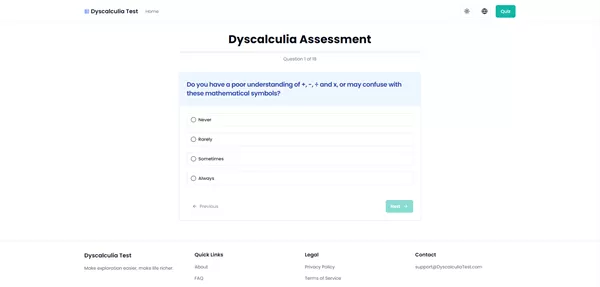
Try our free dyscalculia test online to assess your math difficulties and find out if a professional evaluation is necessary. Although this test does not provide a formal diagnosis, it can indicate whether further professional evaluation is needed.
👉 Get instant insights with our dyscalculia self-assessment test here.
Understanding Dyscalculia
How Does Dyscalculia Affect Daily Life?
Definition and Symptoms
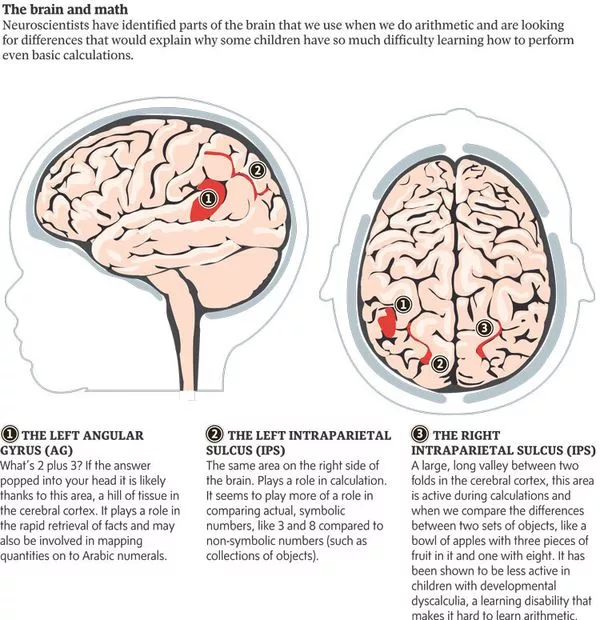
Dyscalculia is a neurological condition that affects how the brain processes numerical information. It is not caused by low intelligence or lack of effort but rather by differences in brain function related to mathematical cognition.Research indicates that dyscalculia affects approximately 5-7% of the population, making early detection crucial. Additionally, studies show that dyscalculia often coexists with other learning disabilities such as dyslexia and ADHD, further emphasizing the importance of early screening.
Common Symptoms of Dyscalculia
- Difficulty recognizing numbers and understanding their relationships.
- Struggles with basic math operations (addition, subtraction, multiplication, division).
- Trouble memorizing math facts (e.g., multiplication tables).
- Confusion with time, money, measurements, and spatial awareness.
- Inability to estimate quantities or compare numerical values.
Differences Between Dyscalculia and Math Anxiety
Dyscalculia is often confused with math anxiety, but they are distinct conditions.
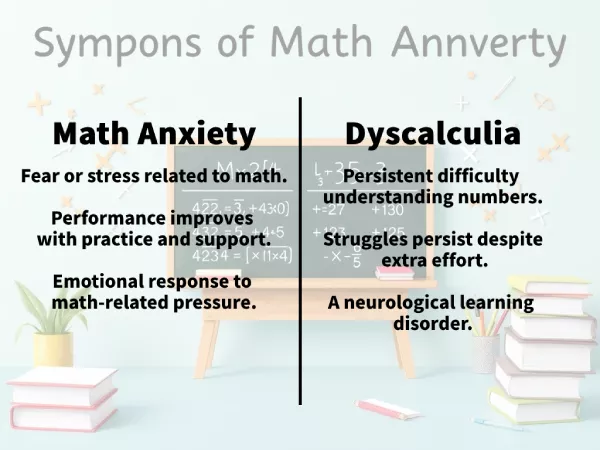
| Math Anxiety | Dyscalculia |
|---|---|
| Fear or stress related to math. | Persistent difficulty understanding numbers. |
| Performance improves with practice and support. | Struggles persist despite extra effort. |
| Emotional response to math-related pressure. | A neurological learning disorder. |
Getting a Dyscalculia Test
Where and How to Get Tested
If you suspect that you or your child has dyscalculia, testing is the first step. There are two main ways to get tested:
- Online Dyscalculia Tests – A quick, accessible first step to assess whether you might have dyscalculia.
- Formal Psychological Assessments – Conducted by professionals such as educational psychologists and neuropsychologists to confirm a diagnosis.
Online Dyscalculia Tests vs. Formal Assessments
| Online Dyscalculia Test | Formal Dyscalculia Assessment |
|---|---|
| Free and accessible. | Conducted by a licensed professional. |
| Provides an initial indication. | Provides a definitive diagnosis. |
| Takes a few minutes to complete. | Can take several hours with multiple evaluations. |
While it does not replace a professional diagnosis, it helps determine whether further assessment is necessary. The test evaluates key skills such as numerical reasoning, pattern recognition, and memory retention—critical areas affected by dyscalculia.
👉 Try our dyscalculia self-assessment online dyscalculia test for quick evaluation. Get instant results with detailed feedback and next-step recommendations after completing the test.
Getting a Dyscalculia Test
Where and How to Get Tested
If you suspect that you or someone you know has dyscalculia, taking a test is the first step toward understanding and managing this learning disability. Testing can be done in two ways:
- Online Dyscalculia Tests – Quick, convenient, and often free self-assessments that provide an initial indication of dyscalculia symptoms.
- Formal Psychological Assessments – Conducted by professionals, these in-depth evaluations provide an official diagnosis and recommendations for support.
Online Dyscalculia Tests and Formal Assessments
Online Dyscalculia Tests
A self-assessment dyscalculia test is an accessible first step in identifying symptoms. These self-assessments measure key mathematical skills, cognitive patterns, and common dyscalculia symptoms. While they do not provide a formal diagnosis, they can indicate whether further evaluation is necessary.
Formal Dyscalculia Assessments
This process typically involves:
- Standardized Math Tests – Measures numerical reasoning, arithmetic skills, and problem-solving ability.
- Cognitive Assessments – Evaluates working memory, attention, and executive function.
- Behavioral and Developmental History – Helps identify patterns in mathematical difficulties.
Who conducts formal assessments?
- Educational Psychologists – Specialize in diagnosing learning disabilities.
- Neuropsychologists – Conduct in-depth cognitive and neurological evaluations.
- School-Based Evaluations – Some schools offer dyscalculia screening for students.
Cost and Accessibility
Price Ranges and Free Testing Options
Online Dyscalculia Tests
- Free self-assessments are available online, including at dyscalculiatest.com.
Formal Dyscalculia Testing Costs
- Private Psychological Assessments: $500 – $2,500 (varies by provider and location).
- School-Based Evaluations: Often free for students if testing is requested through an Individualized Education Program (IEP) process.
- University and Research-Based Clinics: Some universities offer discounted assessments conducted by graduate students under supervision.
Insurance Coverage and Financial Aid
- Health Insurance: Some plans cover evaluations for learning disabilities, but coverage varies.
- Educational Assistance Programs: Some schools provide testing as part of special education services.
- Nonprofit and Charity Support: Organizations like the National Center for Learning Disabilities (NCLD) may offer financial aid.
Diagnosing Dyscalculia
The Diagnostic Process
A formal dyscalculia diagnosis typically includes:
- Initial Consultation – A discussion of symptoms, concerns, and developmental history.
- Comprehensive Testing – A series of math-related cognitive assessments.
- Final Evaluation – A professional review of test results and recommendations.
Who Can Provide a Diagnosis?
- Licensed Psychologists & Neuropsychologists – Perform formal cognitive and learning disability assessments.
- Educational Specialists & School Psychologists – Conduct assessments for students in school settings.
- Speech-Language Pathologists – May evaluate dyscalculia when related to language-based learning difficulties.

A formal diagnosis opens the door to special education services, academic accommodations, and personalized learning strategies to help individuals manage dyscalculia effectively.
Life After Diagnosis
Is Getting a Diagnosis Worth It?
Receiving a formal dyscalculia diagnosis can be life-changing, providing individuals with clarity about their mathematical difficulties and access to appropriate support. A diagnosis can lead to:
- Personalized Learning Plans – Schools can offer accommodations such as extra time on tests or alternative teaching methods.
- Workplace Adjustments – Employees with dyscalculia may receive support such as assistive technology or modified job tasks.
- Emotional Relief – Understanding that dyscalculia is a neurological condition, not a lack of intelligence, can improve confidence and self-esteem.
Strategies for Managing Dyscalculia
While there is no “cure” for dyscalculia, effective strategies can help individuals navigate math-related challenges in daily life, education, and work.
Learning Strategies
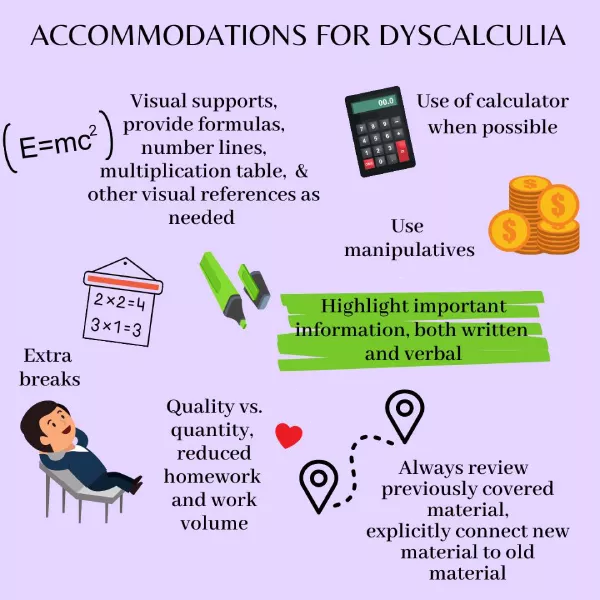
✅ Use Visual Aids – Charts, graphs, and number lines can make numerical relationships clearer. ✅ Break Down Problems – Solving math problems step-by-step reduces cognitive overload. ✅ Repetition and Practice – Regular exposure to math concepts helps reinforce learning.
Assistive Technology
📱 Math Apps – Tools like Photomath and Khan Academy provide step-by-step solutions. 🖥️ Calculators and Digital Tools – Using accessible calculators can simplify complex calculations. 📊 Time and Money Management Apps – Apps like Mint help with budgeting and tracking expenses.
Classroom and Workplace Support
🏫 School Accommodations – Extra time on tests, alternative assessments, and one-on-one tutoring. 💼 Workplace Modifications – Employers may provide digital aids, extra training, or alternative methods for numerical tasks.
FAQs: Common Questions About Dyscalculia
Can Dyscalculia Be Cured?
No, dyscalculia is a lifelong condition. However, targeted strategies and accommodations can significantly improve an individual’s ability to work with numbers.
Can Adults Be Tested for Dyscalculia?
Yes! Although dyscalculia is typically diagnosed in childhood, adults can also be tested and receive appropriate support. Many online tests provide a starting point, and professional assessments are available through psychologists and neuropsychologists.
How Is Dyscalculia Different from Simply Being ‘Bad at Math’?
Dyscalculia is a neurological disorder that affects number processing and mathematical reasoning. It is not due to lack of effort or intelligence, and difficulties persist despite extra practice.
Does Dyscalculia Affect Career Choices?
Dyscalculia can present challenges in careers that require strong math skills, but many fields do not rely heavily on numerical ability. With accommodations and technology, individuals with dyscalculia can succeed in a wide range of professions.
Is dyscalculia linked to ADHD?
Yes, research suggests that many individuals with dyscalculia also have ADHD. Both conditions involve challenges in executive function, which can affect numerical processing and focus.
Take the First Step with a Dyscalculia Test
Dyscalculia can affect various aspects of life, from education to everyday tasks, but early identification and targeted strategies can make a huge difference. If you suspect that you or your child may have dyscalculia, taking an online dyscalculia test is the first step toward understanding and managing the condition.
🎯 Think you might have dyscalculia? Take our free dyscalculia test at dyscalculiatest.com now and receive instant feedback and next steps to get support!