Assessments for Dyscalculia: What They Measure and What to Do Next
Assessments for dyscalculia can feel confusing at first because the word assessment is used for several different things: quick screeners, school evaluations, adult learning assessments, and full professional reviews. The helpful way to think about them is as a pathway. A first screening can help you notice patterns, while a fuller evaluation can look at number sense, calculation, working memory, math reasoning, and real-life impact in more depth. If you are starting from uncertainty, a free math learning screening resource can be a gentle first step before you decide what kind of support to explore next. This guide explains what different assessments usually measure, what they can and cannot tell you, and how to prepare for a useful conversation with a qualified professional.

What Assessments for Dyscalculia Are Designed to Clarify
The main purpose of an assessment for dyscalculia is not to judge effort or intelligence. It is to understand whether a person's math difficulties follow a pattern often associated with a specific learning difference in mathematics. That pattern may involve number sense, remembering math facts, estimating quantities, using symbols, following calculation steps, or applying math to everyday tasks such as time, money, directions, and measurement.
A good assessment also looks beyond a test score. Many people with dyscalculia have worked hard for years and still find numbers unpredictable. Others do well when math is visual but freeze when facts must be recalled quickly. Some adults can manage work and daily life with strategies, yet still feel lost with mental arithmetic, dates, budgets, or forms. Assessment is useful because it separates "I am bad at math" from a more specific profile of strengths, needs, and support options.
It is also important to set the boundary clearly. Online screeners and informal checklists can point to traits worth exploring, but they do not replace a professional evaluation. They can help you organize observations, decide whether the concern is persistent, and bring clearer examples to a school psychologist, educational psychologist, neuropsychologist, or qualified specialist.
Screening, School Evaluation, and Full Professional Assessment
People often use the same phrase for very different steps. A screener is usually brief. It may ask about common signs, everyday math experiences, or short number tasks. The result can help you decide whether the pattern is worth looking at more closely. It is especially helpful when you are early in the process and want language for what you are noticing.
A school evaluation is different. For a child or teen, a school may review classroom performance, academic achievement, teacher observations, intervention history, and whether the student needs formal supports. The goal is often educational planning. It may help determine accommodations, targeted instruction, or eligibility for school-based services, depending on the local system.
A full professional assessment is broader and more individualized. It may include standardized achievement testing, cognitive measures, developmental history, interviews, records, and observations about attention, language, anxiety, and other learning factors. For adults, the process may focus more on lifelong patterns, work or college demands, and practical accommodations. A dyscalculia assessment for adults can be especially validating when someone has spent years compensating without understanding why numbers feel so effortful.
The best step depends on the question you need answered. If you want to understand whether common traits fit your experience, screening may be enough for now. If a student needs classroom support, a school evaluation may be the practical route. If documentation, accommodations, or a detailed learning profile are needed, a comprehensive professional assessment is usually more appropriate.
Skills an Assessment May Look At
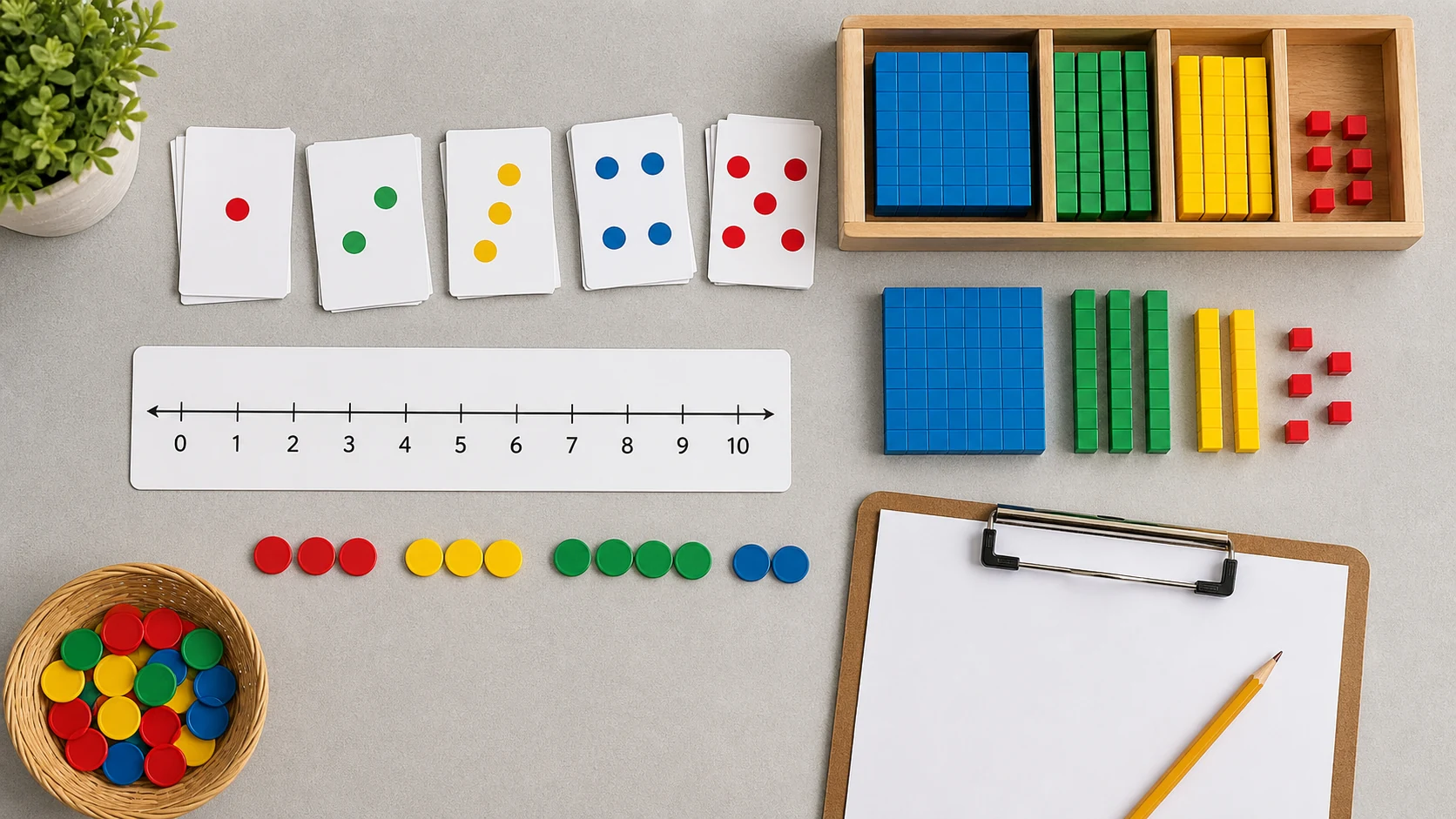
Most assessments for dyscalculia examine several math-related abilities rather than one isolated skill. Number sense is central. This includes understanding quantity, comparing amounts, estimating, recognizing patterns, and knowing where numbers belong in relation to one another. A person can memorize procedures and still struggle with the underlying sense of magnitude that makes math feel intuitive.
Calculation skills are another area. An assessor may look at accuracy, fluency, written computation, mental arithmetic, and whether errors follow a pattern. For example, a learner may understand what addition means but lose place value, reverse steps, confuse operation signs, or need far more time than expected.
Math reasoning also matters. This includes word problems, multi-step tasks, measurement, time, money, and choosing the right operation. Dyscalculia does not always look like simple arithmetic difficulty. Sometimes the challenge appears when a person has to translate a real-life situation into numbers.
Assessment may also consider memory, attention, language, visual-spatial processing, processing speed, and anxiety. These areas do not automatically explain dyscalculia, but they can affect math performance. A careful assessor looks for the pattern: what is difficult, what is easier, how long the difficulty has been present, and whether the problem persists even with instruction and practice.
How to Assess for Dyscalculia Without Jumping to Conclusions
The most useful starting point is evidence from everyday life. Write down concrete examples: losing track while counting change, needing to recount groups repeatedly, mixing up times, struggling to estimate distance, avoiding number-heavy tasks, or forgetting math facts that were practiced many times. For children, collect schoolwork, teacher comments, intervention notes, and examples of errors. For adults, include work, college, budgeting, scheduling, or forms that show where numbers create friction.
Next, look for persistence and patterns. Everyone makes math mistakes. Assessment becomes more relevant when difficulties are long-standing, appear across settings, and do not improve as expected with ordinary instruction. It is also helpful to note what supports already help, such as visual models, extra time, calculators, verbal explanations, or step-by-step templates.
Then choose the right level of assessment. A brief online screener can organize your thinking and help you decide whether to continue. A school-based process can connect a student with classroom support. A private or specialist evaluation may be useful when the question is complex, when adult documentation is needed, or when other factors such as ADHD, dyslexia, anxiety, or language difficulties may be involved.
If you use an online screener, treat the result as a conversation starter. A free dyscalculia screening tool can help you reflect on possible traits, but it should be paired with professional guidance when results may affect schooling, work, accommodations, or mental health decisions.
What Results Can and Cannot Tell You
Assessment results are most helpful when they describe a learning profile, not just a label. A useful report or summary may explain which math skills are most affected, which supports reduce errors, and what next steps make sense. For example, one learner may need explicit number sense instruction, while another may need visual place-value supports, reduced timed drills, or help translating word problems.
Results can also help reduce shame. Many people interpret math struggles as laziness or lack of discipline. A clearer profile can show that the challenge is specific and real, while also identifying practical ways forward. This can be meaningful for adults who have carried old school experiences into work, finances, or daily routines.
At the same time, results have limits. A screener cannot provide a complete picture. A single score should not be treated as the whole story. Even a detailed evaluation should be reviewed in context: age, instruction history, language background, emotional stress, attention, and access to support all matter. The goal is not certainty for its own sake. The goal is better understanding and more effective support.
Questions to Ask Before Choosing an Assessment
Before booking or requesting an assessment, clarify your purpose. Are you trying to understand personal patterns, support a child at school, request accommodations, or plan instruction? Different goals require different levels of documentation.
Ask who will complete the assessment and what training they have in math learning differences. Ask which areas will be reviewed: number sense, arithmetic fluency, math reasoning, working memory, processing speed, and academic history. If the assessment is for a child, ask how teacher observations and intervention records will be included. If it is for an adult, ask whether the process considers lifelong history and daily functional impact.
It also helps to ask what you will receive afterward. A useful result should include plain-language findings, practical recommendations, and next steps. If accommodations are part of the goal, ask whether the report is designed to support school, college, workplace, or exam documentation requirements.
A Practical Next Step for Parents, Adults, and Educators
If you are unsure where to begin, start small and organized. Gather examples, notice patterns, and use screening as a low-pressure first layer. Parents can compare home observations with classroom feedback. Adults can list the number-related tasks that create the most stress. Educators can document which supports improve accuracy, independence, and confidence.
From there, decide whether more formal support is needed. You may choose a school evaluation, a specialist assessment, or a conversation with a qualified professional. You may also decide that practical strategies are the next best step while you continue observing. Assessments for dyscalculia work best when they lead to action: clearer explanations, kinder expectations, useful accommodations, and instruction that fits the learner.
DyscalculiaTest.com is built around that first step of understanding. You can use an accessible math difficulty screener to reflect on possible dyscalculia-related traits and prepare more specific questions for the people who can support you or your child.

FAQ
Are online assessments for dyscalculia enough?
Online assessments are best understood as screeners or self-reflection tools. They can help you notice dyscalculia-related traits and organize examples, but they cannot replace a full professional evaluation when formal documentation or individualized decisions are needed.
What is usually included in a dyscalculia assessment for adults?
An adult assessment may review math history, everyday number difficulties, academic or work impact, achievement skills, memory, attention, processing speed, and strategies already used. The exact process depends on the professional, the country, and the reason for assessment.
How do you assess for dyscalculia in a child?
For a child, assessment often combines parent concerns, teacher observations, schoolwork, intervention history, and standardized measures of math achievement and related cognitive skills. The goal is to understand the student's learning profile and support needs.
Can someone be good at some math and still need assessment?
Yes. Dyscalculia-related patterns can be uneven. A person may understand concepts with visual support but struggle with math facts, estimation, timed tasks, place value, or real-life number use. Assessment looks for the pattern across tasks.
What should I bring to a professional assessment?
Bring examples of math work, notes about everyday difficulties, school reports, previous assessments, intervention records, and a short timeline of when the concerns began. Adults can also include examples from work, college, budgeting, scheduling, or daily routines.
What happens after an assessment?
The next step is usually to review the findings and turn them into support. That may include targeted instruction, accommodations, visual tools, extra time, assistive technology, or a plan for discussing needs with school, college, or workplace contacts.