Autism and Dyscalculia: How They Overlap and What Math Difficulties May Mean
Autism and dyscalculia can appear together, but one is not simply a version of the other. Autism affects social communication, sensory processing, routines, attention, and learning style. Dyscalculia is a specific math learning difference that affects number sense, calculation, math facts, time, and quantity. When a child, teen, or adult is autistic and also struggles with numbers, the real question is not "Which label explains everything?" It is "What pattern of support fits this person's math profile?" If you are trying to sort that out, a calm first step is to review math difficulty patterns with an early dyscalculia screening resource while remembering that online screening is educational, not a clinical diagnosis.

Is Dyscalculia a Form of Autism?
No. Dyscalculia is not a form of autism, and autism does not automatically mean a person has dyscalculia. They are different neurodevelopmental profiles. Autism may shape how someone communicates, processes sensory input, handles transitions, interprets language, and manages flexible problem solving. Dyscalculia more directly affects the brain's handling of numerical information.
That distinction matters because math can be hard for many reasons. An autistic student might understand number quantity but struggle with word problems because the language is indirect, the worksheet is visually crowded, or the classroom is too noisy. Another autistic student might have persistent trouble comparing amounts, remembering basic math facts, estimating time, or understanding place value even with clear teaching. The second pattern may point more strongly toward dyscalculia.
Research on math learning in autism is still developing. Some studies find that autistic learners, especially those without intellectual disability, may have uneven math profiles: stronger rule-based or visual reasoning in some areas, but weaker performance on applied problems, mental calculation, or multi-step tasks. Smaller studies have also reported elevated rates of mathematics learning disability in autistic samples compared with matched peers. That does not give a universal number for every autistic child or adult, but it supports a practical message: math difficulties in autism deserve careful attention instead of being dismissed as "just autism."
Why Autism Can Affect Math Learning
Searches like "how does autism affect maths" often come from parents or adults who see a confusing mix of strengths and barriers. Some autistic people enjoy patterns, systems, and precision. Others find math exhausting. Many experience both, depending on the type of task and the environment.
Executive function can affect math because arithmetic often requires holding several steps in mind, inhibiting a first guess, checking the operation, and shifting strategy when one approach fails. Working memory can make mental math or long division especially difficult. Language processing can affect word problems, especially when the question hides the key information inside a story. Sensory overload can reduce available attention before the math task even begins.
Math anxiety can also become part of the loop. A student may freeze when timed facts appear, not because they lack effort, but because the format triggers pressure. An adult may avoid bills, schedules, discounts, or forms because number tasks have carried years of embarrassment. In autism, that emotional load can combine with sensory overwhelm, perfectionism, or difficulty recovering from mistakes.
These autism-related factors can look similar to dyscalculia from the outside. The useful move is to observe the pattern beneath the struggle: Is the person mainly blocked by language, pace, environment, and multi-step demands, or do they show a deeper and more consistent difficulty with number meaning itself?
Signs That Math Difficulty May Involve Dyscalculia
Dyscalculia signs are usually persistent, specific, and visible across settings. A child may struggle to understand that a number represents a quantity, compare which group is larger, count on without losing track, or learn number bonds despite repeated practice. Older students may rely heavily on fingers, mix up operations, forget multiplication facts, misread place value, or become lost when numbers are arranged differently on the page.
Adults may notice a different version of the same pattern. They may avoid mental arithmetic, estimate time poorly, confuse left and right, struggle with tips and discounts, feel unsafe with budgets, or need unusually careful systems for calendars and deadlines. Dyscalculia and autism in adults can be easy to miss because many people have built workarounds for years.

A dyscalculia pattern may be more likely when number sense is weak even in calm, untimed, well-explained situations. For example, if a learner can explain a story problem once the numbers are removed but cannot compare quantities, remember basic facts, or see why 407 is different from 470, the number system itself may be the main barrier. If the learner performs much better with manipulatives, number lines, place value blocks, or visual spacing, that is useful information too.
It is also possible to have autism, ADHD, dyslexia, dyspraxia, and dyscalculia in overlapping combinations. Co-occurring profiles can blur the picture. ADHD may add attention and working-memory challenges. Dyslexia may affect math vocabulary and symbol reading. Dyspraxia may affect layout, handwriting, and spatial organization. The goal is not to collect labels. The goal is to understand which supports reduce the load.
How to Tell the Difference in Everyday Observation
A simple observation log can reveal more than one dramatic math session. Track the task, setting, support, and error pattern over two to three weeks. Keep the notes neutral: "counted objects accurately but lost track after 12," "knew the operation but copied 63 as 36," "solved with counters but not in head," or "understood the math after the wording was simplified."
Autism-related math barriers often shift when the environment changes. The person may do better when instructions are literal, the page has less clutter, the room is quieter, the task is untimed, or transitions are predictable. Dyscalculia-related barriers often remain even after those changes, especially for quantity comparison, arithmetic fact retrieval, place value, estimation, and number sequencing.
That difference is not a perfect test. It is a clue. Many people need both sets of supports: autism-aware accommodations and number-specific teaching. A learner might need a predictable routine, reduced sensory load, and explicit language for word problems, while also using a number line and concrete materials to build quantity understanding.
For families and adults who want a structured starting point, a free math learning difference check can help organize observations before a school meeting or professional evaluation. It should not be treated as a final answer, but it can make the next conversation more specific.
Support Strategies for Autistic Learners With Number Difficulties
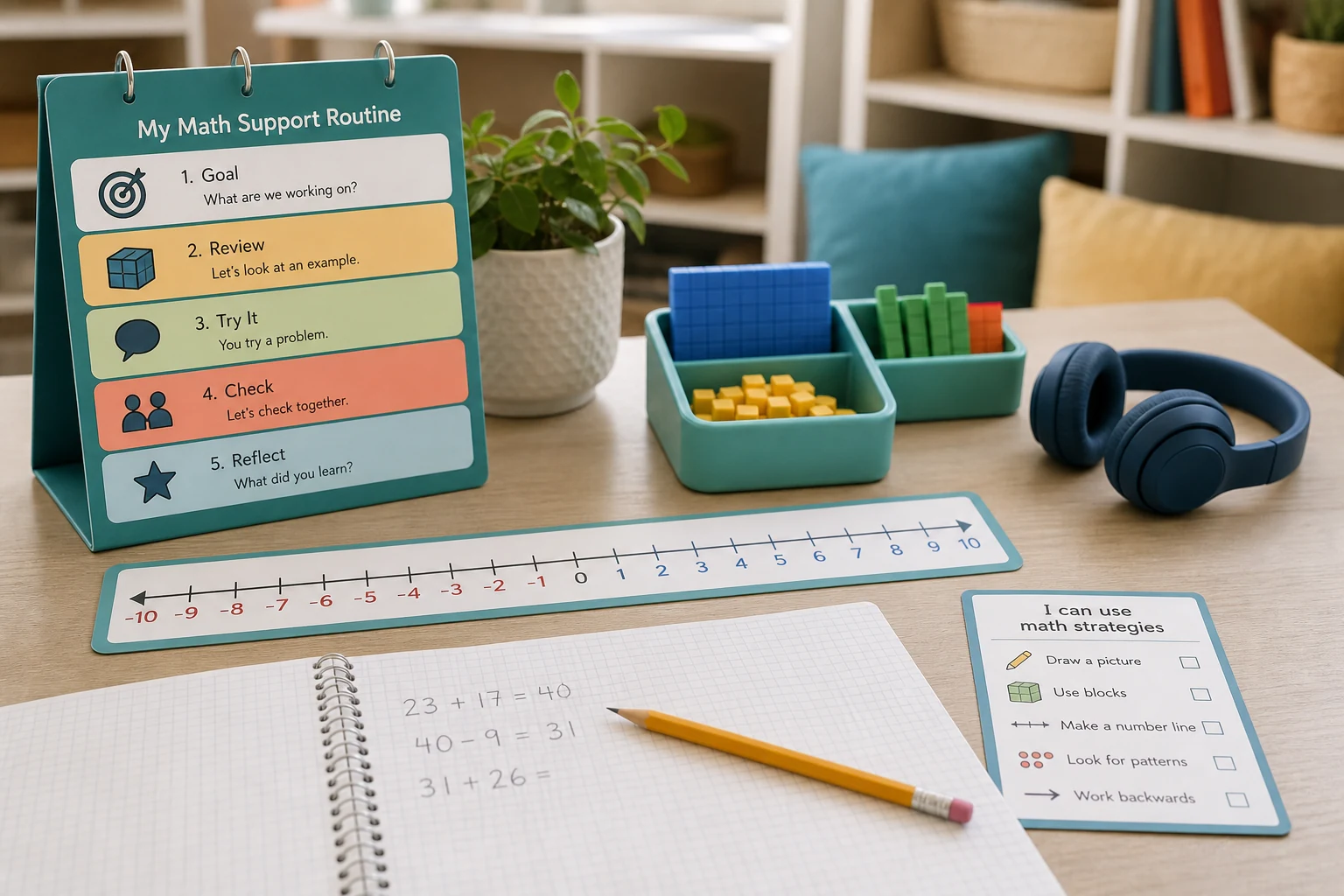
Start with predictability. Preview the task type, show a worked example, and explain what "finished" looks like. Many autistic learners do better when the math routine is consistent: warm-up, visual model, guided practice, independent attempt, check-in. Reducing uncertainty can free up attention for the number work.
Use concrete and visual supports. Number lines, ten frames, dot patterns, base-ten blocks, graph paper, and color-coded place value columns can make invisible relationships visible. For dyscalculia, these tools are not babyish shortcuts. They are access tools that support number meaning.
Separate language from calculation when needed. If word problems are hard, first check whether the learner understands the story, the vocabulary, and the question. Then isolate the numerical relationship. Use direct phrasing before introducing more varied language. This helps identify whether the main barrier is reading comprehension, inference, math reasoning, or number processing.
Reduce timed pressure. Timed drills can be especially discouraging for learners with slow fact retrieval, anxiety, or processing differences. Fluency can grow through repeated, low-pressure practice, but speed should not be the only sign of progress. Accuracy, strategy choice, and confidence matter too.
Build practical math into real routines. Counting coins, reading bus times, comparing prices, setting timers, measuring ingredients, or planning travel can connect numbers to meaning. For autistic learners, make the routine explicit and predictable. For dyscalculia, keep the visual supports available long enough for the concept to become stable.
Autism, ADHD, Dyslexia, and Dyscalculia Together
The search phrase "autism dyslexia and dyscalculia" reflects a real concern: neurodevelopmental differences often cluster. A person may have strong verbal knowledge but weak math facts, strong visual memory but difficulty with written steps, or good conceptual understanding but poor speed and organization. When ADHD is also part of the picture, attention shifts, impulsive errors, and working-memory limits can make math look even more inconsistent.
This is why support should be profile-based. One learner may need explicit phonics support for math vocabulary, another may need occupational therapy input for written layout, another may need executive function scaffolding, and another may need intensive number-sense intervention. A broad label rarely tells the whole story.
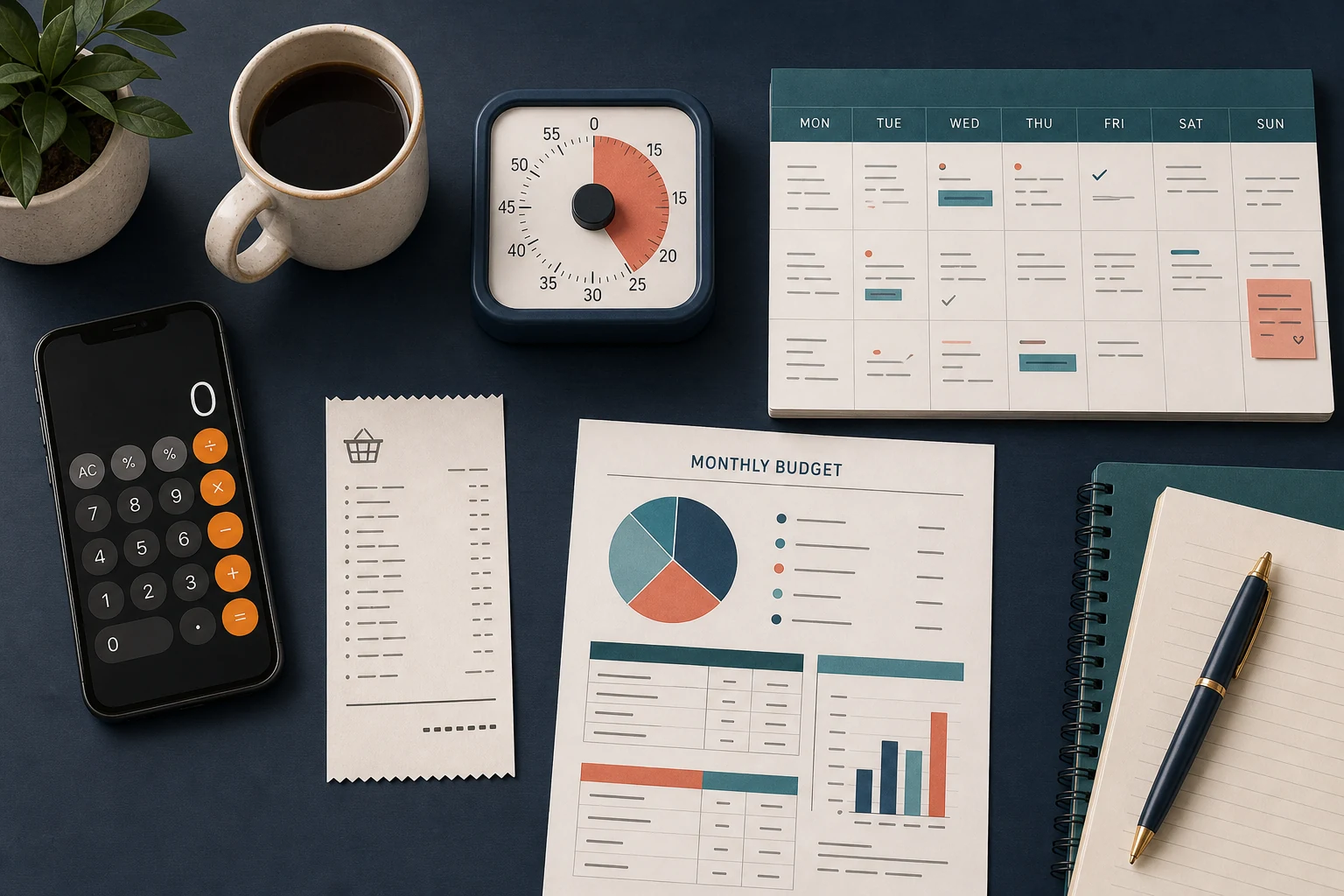
For adults, the overlap can affect employment, money management, cooking, medication schedules, travel, and time planning. Many adults have survived by avoiding number-heavy tasks or outsourcing them. That strategy can work for a while, but it may also limit choices. Replacing shame with practical systems is often the most helpful shift: calculators, visual timers, budget templates, GPS, automatic payments, and written step lists are legitimate supports.
When to Seek More Formal Support
Consider a school-based or professional evaluation when math difficulty is persistent, causes distress, limits daily functioning, or does not improve with clear instruction and accommodations. For children, bring specific examples: classwork, homework, teacher notes, observation logs, and details about what helps. For adults, bring examples from daily life and work, not just memories of school.
Useful questions include: Does the person understand quantity? Can they compare numbers without counting every item? Do they remember facts after practice? Do errors increase under time pressure? Do sensory or language adjustments change performance? Are difficulties present across home, school, work, and daily routines?
If you are not ready for a formal step, you can still gather information. Use gentle screening, keep notes, and try targeted supports. A preliminary dyscalculia reflection tool may help you name patterns more clearly, especially if autism, ADHD, dyslexia, or anxiety make the picture feel tangled. The best next step is the one that turns confusion into a more useful question.
FAQ
Can you have autism and dyscalculia?
Yes. A person can be autistic and also have dyscalculia. They can also have autism without dyscalculia, or dyscalculia without autism. The overlap is possible because neurodevelopmental differences can co-occur, but each person's learning profile should be considered individually.
Is dyscalculia related to autism?
They are related in the sense that both are neurodevelopmental and can appear together. They are not the same condition. Autism may affect math through sensory processing, language, executive function, and anxiety, while dyscalculia more directly affects number sense and calculation.
How can I help an autistic child with math?
Use predictable routines, clear language, visual models, concrete materials, and low-pressure practice. Reduce sensory distractions and avoid relying only on timed drills. Watch which supports make the biggest difference, because that can show whether the barrier is mainly environmental, language-based, executive-function related, number-specific, or mixed.
What are common symptoms of dyscalculia?
Common signs include difficulty comparing quantities, counting accurately, remembering math facts, understanding place value, estimating time, reading analog clocks, handling money, and following multi-step calculations. Signs vary by age, and online information should be used for education rather than as a clinical conclusion.
Can autistic adults have dyscalculia?
Yes. Dyscalculia and autism in adults may show up as long-term difficulty with budgets, schedules, estimates, mental arithmetic, workplace forms, travel planning, or number-heavy tasks. Many adults use workarounds, so the pattern may not be obvious until daily demands increase.
Can level 2 autism live independently?
Some people with level 2 autism live independently or semi-independently with the right supports, while others need ongoing assistance. Independence depends on communication needs, daily living skills, sensory needs, health, support network, safety skills, and practical accommodations. It is not determined by math ability alone.