Can You Have Dyslexia for Numbers Only? The Reality of Math Hurdles
If you can read books smoothly but find yourself constantly shuffling digits, you might wonder about your mental patterns. Many people describe this frustrating daily experience as having dyslexia with numbers only. While that specific phrase is a common colloquial term, the underlying processing difficulties you feel are completely real. This comprehensive guide will unpack exactly how the human brain manages numerical symbols differently from text. You will discover practical strategies, structured checklists, and safe ways to explore your cognitive style. Understanding these unique cognitive tendencies helps you navigate daily challenges, so you can explore our math trait profiling resources to find clarity and support.

Is "Number-Only Dyslexia" a Real Medical Condition?
When you easily read a complex novel but struggle to copy down a simple phone number, you might feel confused. However, neuroscience shows that reading words and processing numerical values rely on entirely different neurological systems. Experiencing challenges like dyslexia with numbers only is a distinct reality based on how the human mind coordinates diverse symbols.
The Neurological Separation of Words and Values
Your brain uses distinct specialized neural pathways to decode linguistic text versus mathematical equations. Language processing primarily activates the left hemisphere's perisylvian network, which manages phonology, syntax, and word recognition. In contrast, numerical processing relies heavily on the intraparietal sulcus located in both hemispheres. Because these regions operate independently, a person can experience significant disruption in numerical tracking while maintaining exceptional linguistic skills. Therefore, experiencing challenges exclusively with numbers is a distinct cognitive reality based on brain design.
Shifting from "Math Dyslexia" to Dyscalculia
Although the phrase dyslexia with numbers only makes sense intuitively, the official scientific term is dyscalculia. Dyscalculia refers specifically to a persistent difficulty in understanding, manipulating, and remembering numerical values and mathematical concepts. While reading differences center on phonological decoding, numerical differences alter how a person perceives quantity, mathematical logic, and symbolic values. Recognizing the correct professional term helps you find accurate information, targeted strategies, and appropriate educational tools.
Spotting the Signs: How Numerical Differences Manifest
Recognizing how specific number differences disrupt daily adult life helps replace self-blame with constructive understanding. Many adults hide their struggles, believing they are just careless, when they actually process symbols differently. If you suspect you experience dyslexia with numbers only, looking at real-world scenarios can bring immense relief.
What Are the Key Signs of Adult Dyscalculia?
In adulthood, numerical tracking difficulties extend far beyond classroom blackboards and textbook equations. You might find yourself constantly arriving late because estimating how long a drive takes feels nearly impossible. Also, reading financial spreadsheets can cause immediate cognitive fatigue because the rows of data seem to shift out of alignment. You may frequently swap digits while typing bank account numbers, leading to repetitive errors. These challenges often create intense dread around everyday tasks like dividing a restaurant bill among friends.
To make these patterns clearer, consider these common practical behavioral indicators:
- If you are asked to copy a ten-digit confirmation code, then you find yourself re-reading it five times because the numbers blur.
- If you try to follow step-by-step assembly instructions, then the numbered steps appear out of order or jumbled to your eyes.
- If you manage a monthly budget spreadsheet, then you frequently misalign decimal places without realizing it until later.
- If you give someone driving directions, then you easily mistake the phrase "take exit 52" for "take exit 25."
The 5 Recognized Types of Numerical Processing Differences
To help you identify specific patterns, researchers categorize numerical processing differences into five core areas:
- Verbal Dyscalculia: Difficulty naming mathematical symbols or reciting oral numerical sequences correctly.
- Practognostic Dyscalculia: Challenges translating abstract mathematical concepts into concrete physical objects or spatial arrangements.
- Lexical Dyscalculia: Trouble reading mathematical symbols, operational signs, or written digit sequences accurately.
- Graphical Dyscalculia: Difficulty writing numbers down sequentially, often resulting in accidental digit transpositions.
- Ideognostical Dyscalculia: Challenges performing mental calculations and understanding abstract numerical relationships without visual aids.
The Biological Blueprint: Why Digit Scrambling Happens
To understand why digit reversals occur, you must look into the cognitive mechanics of your mind. Experiencing structural numeric flips does not mean you lack intelligence; instead, it indicates a distinct processing style.
The Role of Visual-Spatial Working Memory
Your brain relies on visual-spatial working memory to hold and manipulate physical and numerical arrangements simultaneously. When you look at an analog clock or a map, your mind must measure spatial distances accurately. For individuals with numerical processing differences, this mental scratchpad can experience rapid processing overloads. Consequently, you might struggle to tell left from right or find yourself disoriented by simple geometric designs. This visual-spatial limitation makes tracking the physical placement of numbers on a page highly taxing.
Why Multi-Digit Transposition Occurs in Sequential Tracking
When you look at multi-digit numbers, your brain must track both the individual digits and their sequence. For example, your mind needs to actively remember that 69 and 96 contain identical symbols but entirely unique values. If your sequential tracking system experiences a bottleneck, your mind may invert these digits during transcription.
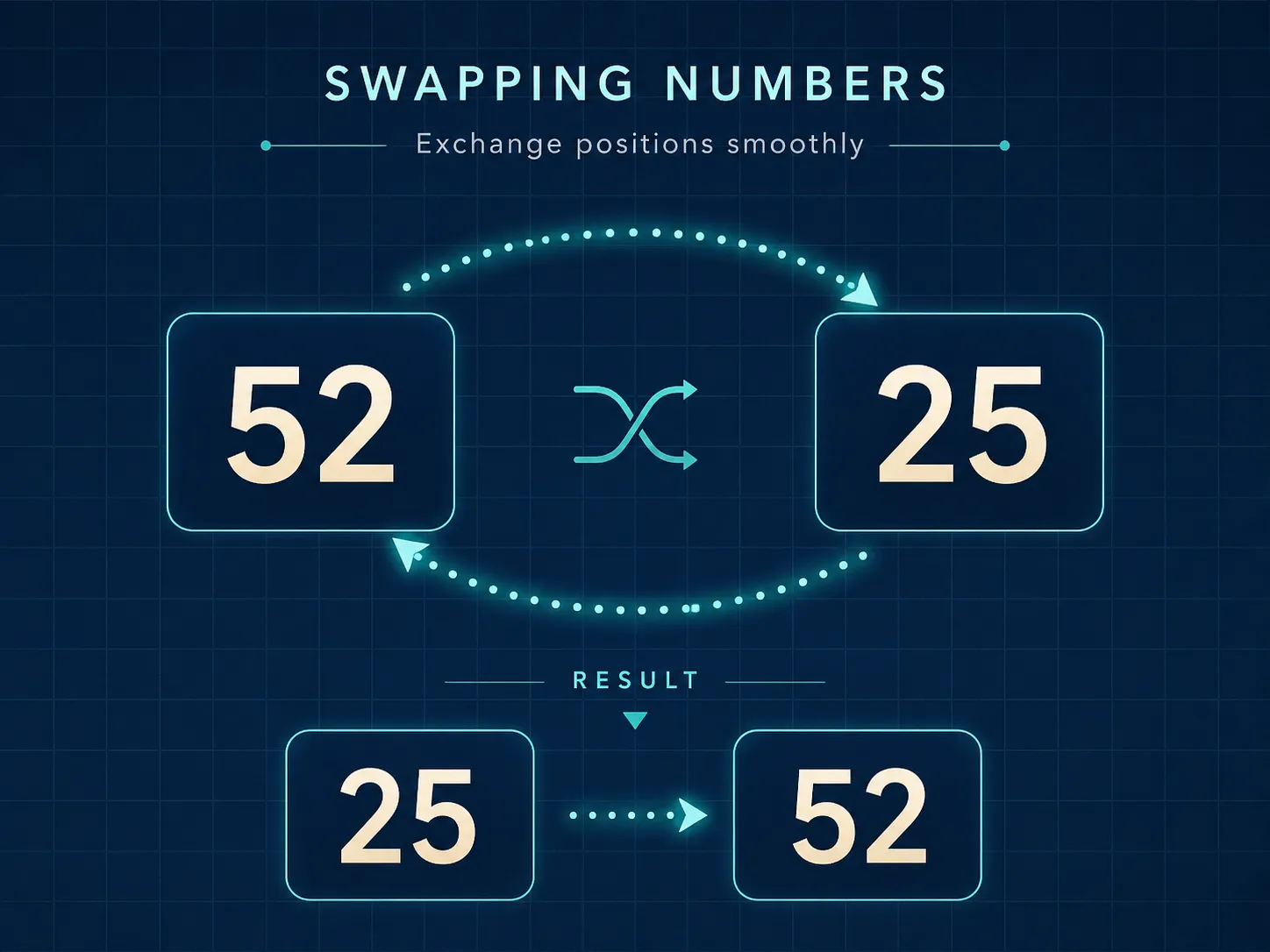
| Common Tracking Mistake | What Your Brain Processes | Practical Daily Fix |
|---|---|---|
| Transposing 52 as 25 | Swaps sequential value order | Color-code digit columns |
| Reading 6 as 9 | Inverts visual orientation | Use distinct sans-serif fonts |
| Dropping middle digits | Loses track of the midpoint | Cover surrounding numbers with a ruler |
Dyscalculia vs. Dyslexia: Unpacking the Overlap
While language challenges and numerical hurdles are distinct, they frequently intersect within the same person. Understanding this cognitive intersection helps you decode your own neurodivergent profile more holistically.
When Decoding Symbols Crosses Paths
Both reading and mathematics require your brain to translate abstract visual symbols into meaningful internal concepts. When you read the letters "c-a-t," your mind quickly constructs an image of a feline. Similarly, seeing the symbol "7" requires your brain to instantly understand an abstract concept of seven separate items. If your brain experiences generalized difficulty with symbolic decoding, you may struggle with both letters and digits. This shared decoding hurdle explains why text and numbers can occasionally feel jumbled at the exact same time.
Statistical Realities of Having Co-occurring Trait Profiles
Research indicates that neurodivergent traits rarely exist in total isolation within the human mind. In fact, clinical studies show a high rate of co-occurrence between reading differences and numerical processing challenges. If you navigate lifelong literacy challenges, you face an increased likelihood of experiencing math processing hurdles as well. Recognizing this co-occurrence helps you see that your challenges are interconnected aspects of a unique cognitive blueprint. You can check your traits with this dyslexia test platform to map your full cognitive patterns safely.
Mapping Your Cognitive Traits: Contextualizing Your Next Steps
Acknowledging your unique processing patterns is a powerful turning point that allows you to seek targeted support. Gathering objective information helps you transition away from frustrating guesswork and move toward real clarity.
Why Structured Self-Reflection Beats Guesswork
Living with unverified numerical difficulties often causes people to develop deep-seated feelings of intellectual inadequacy. You might look back on your school years and assume you simply did not try hard enough. However, structured self-reflection allows you to analyze your specific behavioral patterns through a compassionate, scientific lens. By cataloging when and how your mind shuffles data, you remove the emotional shame attached to these errors. This structured awareness empowers you to speak about your needs clearly with educators, workplace managers, or clinicians.
How an Online Screening Tool Helps Map Your Number Patterns
An online trait screener serves as an accessible, stress-free tool designed to help you organize your personal observations. These educational questionnaires assess how you handle everyday numerical tasks like time estimation, sequential copying, and spatial navigation.
Please remember that an online questionnaire is an educational screening resource meant for personal discovery, not a medical evaluation.
The results show you a clear summary of your cognitive style without assigning rigid clinical labels. You can use this report to implement targeted lifestyle adjustments or share it with a professional counselor later.

Navigating Math Anxiety vs. Structural Processing Differences
It is essential to separate structural tracking differences from the emotional weight of severe math anxiety. Chronic stress can mimic learning differences, making it crucial to evaluate your feelings before seeking formal conclusions.
The Emotional Paralysis of Early Math Trauma
Many adults carry invisible emotional scars from early educational environments that penalized mistakes aggressively. If you faced public embarrassment at a blackboard as a child, your brain likely developed an automated fear response. Over time, this fear hardens into math trauma, which triggers an immediate fight-or-flight reaction around numbers. When this stress response activates, your body releases cortisol, which temporarily paralyzes your prefrontal cortex. As a result, you cannot think clearly, causing you to make simple mistakes that look like an innate learning difference.
How Chronic Stress Temporarily Blockades Numerical Competence
To determine if your challenges stem from anxiety or a structural processing difference, analyze your stress levels. If you can calculate a restaurant tip easily while alone but freeze during a high-stakes meeting, anxiety is likely the primary factor. True structural differences remain consistent regardless of how calm or supported you feel in the moment.
If you find yourself freezing up, try using this simple three-step grounding technique to calm your nervous system before working with data:
- The Pause Step: Stop typing or writing immediately when you feel panic rising, and place both feet flat on the floor.
- The Box-Breathing Step: Inhale deeply for four seconds, hold for four seconds, and exhale completely for another four seconds to lower your heart rate.
- The Visual Grounding Step: Look away from the numbers, identify three non-numerical objects in your room, and describe their colors silently to reset your prefrontal cortex.
Separating emotional blocks from neurological patterns ensures you choose the right tools for your personal development journey. If daily confusion leaves you feeling overwhelmed, seeking an evaluation from a clinical psychologist can offer formal guidance.
Empowering Your Mind Beyond the Numbers
Navigating a world built around numerical data requires patience, self-compassion, and practical, everyday accommodations. Remember that processing numbers differently is a variation in cognitive architecture, not a measure of your worth or intelligence. By adopting multi-sensory tools, managing stress, and using technology intentionally, you can bypass traditional bottlenecks and build a lifestyle that honors your strengths. If you want to explore your personal cognitive style further, take a moment to utilize our comprehensive profiling resources to gain deeper, reliable self-awareness.
Frequently Asked Questions
Can dyscalculia be managed or improved over time?
Yes, dyscalculia can be managed effectively throughout adulthood by using targeted accommodations and multi-sensory learning strategies. While your foundational neural architecture remains consistent, neuroplasticity allows you to build reliable mental workarounds that improve numerical tracking.
Is dyscalculia a form of ADHD?
No, dyscalculia is not a form of ADHD, as they are separate neurological conditions with distinct origins. However, the executive functioning challenges associated with ADHD, such as working memory deficits, frequently compound numerical processing errors.
What are the red flags for dyscalculia in adults?
Common adult red flags include chronic difficulties estimating time, transposing digits while copying sequences, struggling with left-right orientation, and experiencing extreme mental exhaustion when analyzing basic spreadsheets.
How do you formally assess for numerical differences?
To receive a formal evaluation, you must schedule a comprehensive neuropsychological assessment with a licensed educational psychologist or clinical clinician. They will administer standardized tests to measure your intelligence, working memory, and mathematical processing skills accurately.
What celebrities have dyscalculia?
Iconic figures such as Cher, Robbie Williams, and Henry Winkler have spoken publicly about their lifelong struggles with numerical processing. Their achievements demonstrate that you can build an incredibly successful life while managing unique mathematical processing differences.