Confusion With Numbers: When It May Point to Dyscalculia
Confusion with numbers can feel oddly personal. You may read a price twice, mix up digits in a phone number, lose your place while counting, or freeze when a simple calculation appears in daily life. Occasional mistakes happen to everyone, especially under stress. But when number confusion is persistent, has been present for years, or affects school, work, money, time, directions, or confidence, it may be worth learning about dyscalculia. Dyscalculia is a math-related learning difference that can affect number sense, calculation, and mathematical reasoning. If you want a gentle starting point, the dyscalculia screening resource can help you organize what you are noticing before deciding whether to seek a formal professional assessment.
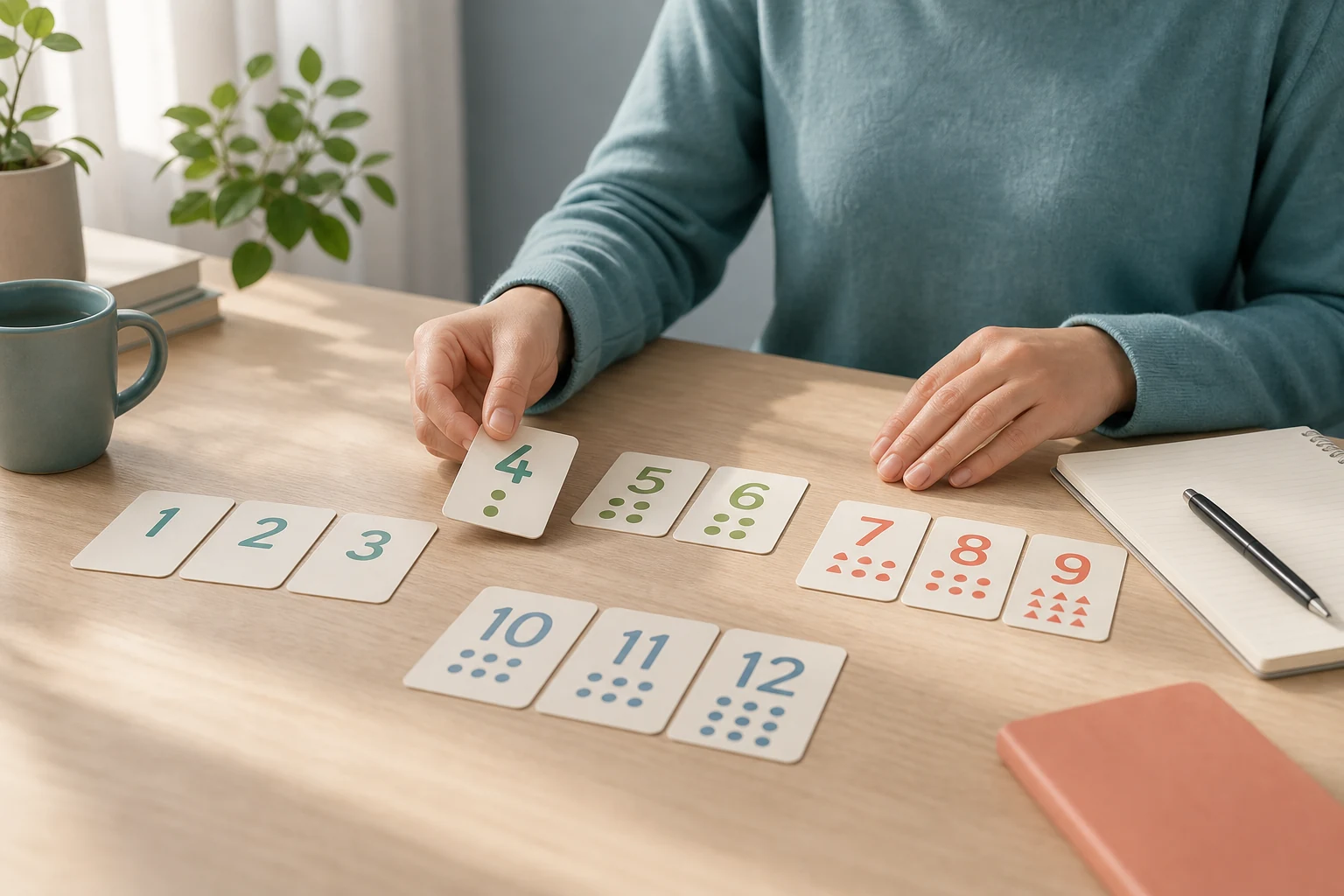
What Confusion With Numbers Can Mean
Number confusion is not one single thing. For one person it may mean reversing digits, such as reading 41 as 14. For another, it may mean knowing a fact yesterday but being unable to retrieve it today. Someone else may understand a math idea during a lesson but lose it when the same idea appears in a word problem, receipt, recipe, clock, map, or spreadsheet.
It helps to separate common slips from recurring patterns. A common slip is occasional, understandable, and usually tied to fatigue, hurry, distraction, or unfamiliar material. A recurring pattern shows up across settings. It may affect simple facts, estimation, place value, time, money, measurement, or the ability to compare quantities.
Dyscalculia is one possible explanation for a persistent pattern, but it is not the only one. Anxiety, gaps in instruction, ADHD, vision or hearing issues, language difficulties, limited practice, or stress can also make numbers harder to manage. The most useful first question is not "What label fits me?" but "What kind of number task breaks down, how often, and in what setting?"
Signs That May Fit Dyscalculia Symptoms
Dyscalculia symptoms vary by age and by the specific number skills involved. In children, the first clues often appear when counting, recognizing numerals, matching a number to a quantity, using a number line, or remembering basic math facts stays unusually difficult after repeated instruction. A child may count objects one by one long after classmates can recognize small groups, avoid board games that involve counting, confuse math symbols, or struggle to understand greater than and less than.
In teens and adults, the signs may look less like classroom math and more like daily friction. A person may misread schedules, feel unsure about tips and change, lose track while following a recipe, struggle with mental arithmetic, dread budgeting, confuse left and right, or need extra time to interpret graphs, measurements, or forms. Some adults describe "dyslexia with numbers in adults" because the experience feels like symbols are slippery. The more precise term is usually dyscalculia, though dyslexia and dyscalculia can also occur together.
Emotional patterns matter too. Repeated number difficulty can lead to avoidance, embarrassment, or math anxiety. That emotional response does not prove dyscalculia, but it can make the original difficulty harder to see clearly. A calm record of what happens is often more useful than judging the person as careless or "bad at math."

Is It Number Dyslexia or Dyscalculia?
"Number dyslexia" is a common search phrase, but it can be confusing. Dyslexia mainly affects reading, spelling, and language processing. Dyscalculia mainly affects number sense, calculation, and mathematical reasoning. People use phrases like "what is number dyslexia" or "can you be dyslexic with numbers and not letters" because they are trying to describe a real pattern in familiar language.
A person can have dyslexia with numbers and letters if reading and number processing are both difficult. A person can also have dyscalculia without major reading difficulty. There can be overlap, but the support needs may differ. A reading difficulty might call for phonics-based literacy support, while number confusion may call for visual math tools, explicit instruction in place value, number lines, step-by-step calculation routines, and accommodations around time or mental math.
The practical takeaway is simple: do not stop at the nickname. Notice whether the main difficulty is reading words, interpreting numbers, understanding quantities, remembering math facts, applying procedures, or managing the anxiety that follows repeated mistakes.
Why Confusion With Numbers Happens
Math uses many skills at once. To solve even a small problem, the brain may need to recognize symbols, hold steps in working memory, understand quantities, recall facts, choose an operation, track sequence, and check whether the answer makes sense. If one of those processes is weak, the whole task can feel unstable.
Dyscalculia causes are still being studied. Research and clinical writing commonly describe it as a neurodevelopmental learning difference related to how number and quantity information are processed. Family patterns may play a role, and dyscalculia can appear alongside ADHD, dyslexia, developmental coordination differences, or autism. That does not mean dyscalculia is a form of autism, or that every person with one condition has another. It means careful assessment often looks at the full learning profile, not math in isolation.
It is also possible for number confusion to appear later in life after illness, injury, medication changes, severe stress, or another health event. New or sudden changes in number ability should be discussed with a qualified health professional, especially if they come with memory, speech, vision, movement, or mood changes.
What To Track Before Seeking an Assessment
Before a professional assessment, a simple observation log can turn vague worry into useful information. Track situations rather than trying to prove a conclusion.
Use this checklist for two to four weeks:
- What number task was difficult: counting, time, money, measurement, directions, math facts, word problems, charts, or forms.
- What happened: digit reversal, skipped step, lost place, slow recall, guessed answer, avoided task, or became overwhelmed.
- How often it happened and whether it appeared across home, school, work, or daily errands.
- What helped: number line, calculator, written steps, visual grouping, extra time, quiet setting, or verbal explanation.
- What did not help: more repetition, speed drills, mental math pressure, or copying procedures without meaning.
For children, include teacher observations and samples of schoolwork. For adults, include real-life examples such as budgeting, scheduling, cooking, travel planning, or workplace tasks. Patterns across time are more informative than one difficult test or one bad week.
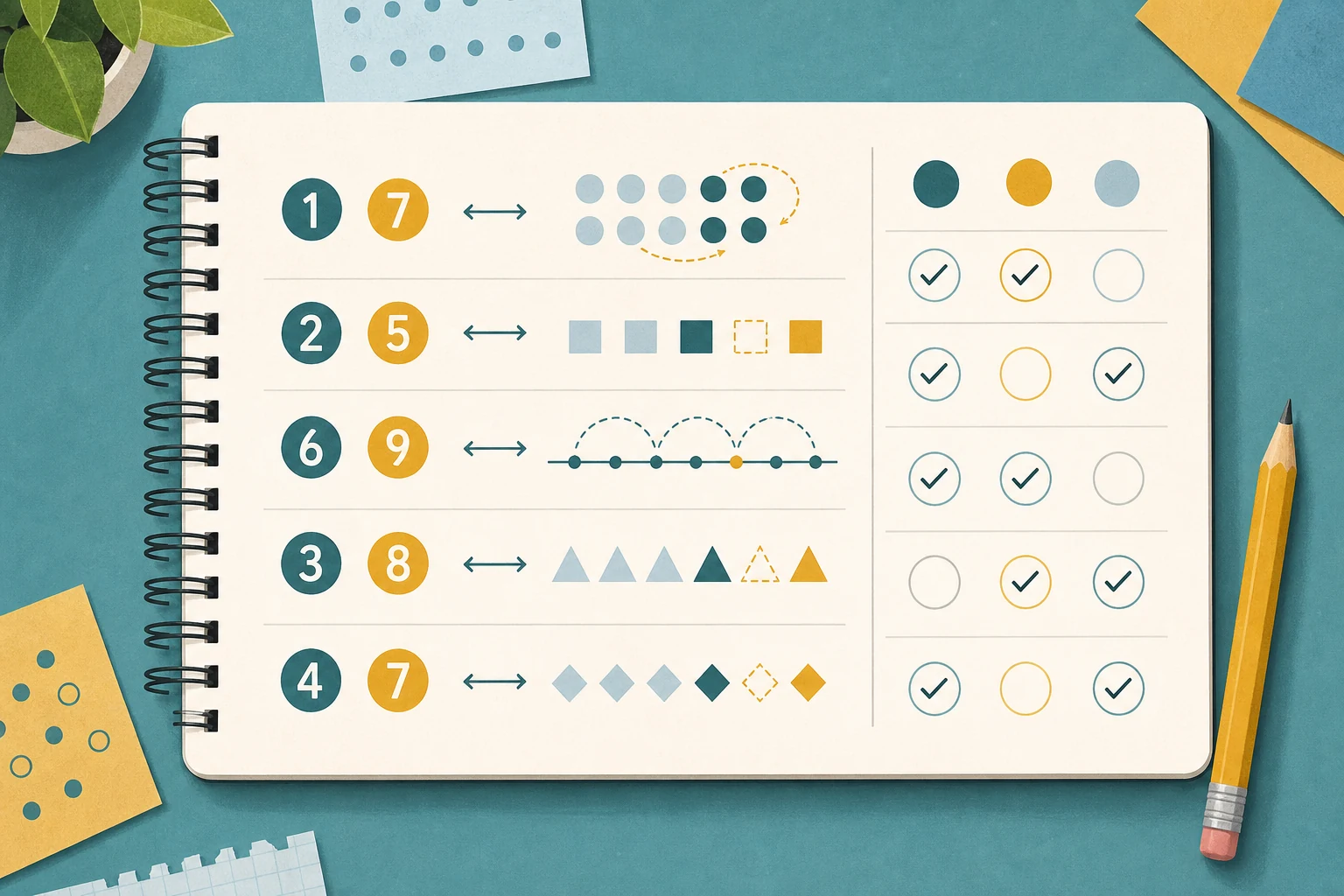
How To Respond at Home, School, or Work
Support should reduce cognitive load and make number relationships visible. For children, this may mean using manipulatives, number lines, visual grouping, games that build quantity sense, and explicit teaching of place value. It also means avoiding shame-based comments. A child who needs a different route into math is not lazy.
For teens, support may include graph paper, formula cards, worked examples, calculator access when calculation is not the skill being tested, extra time, and permission to explain reasoning verbally. Teachers can look for whether the student understands the concept but loses accuracy in notation, steps, or recall.
For adults, useful tools can be very ordinary: calendar alerts, banking categories, calculator shortcuts, written templates for tips or unit conversions, labeled measuring cups, budgeting apps, and checking important numbers with a second method. The goal is not to remove every number task. The goal is to make important tasks more reliable and less draining.
If confusion with numbers is affecting daily life, the free dyscalculia test information can be used as an educational reflection tool. It should not replace a professional assessment, but it can help you name the patterns you want to discuss.
A Calm Next Step for Confused With Numbers
If you are confused with numbers often, start small. Write down the situations that cause the most trouble, note what helps, and look for patterns across several weeks. If the pattern is long-standing, affects learning or daily tasks, or causes significant distress, consider speaking with an educational psychologist, learning specialist, physician, or school support team.
An online screen can be a first organizing step, not a final answer. The number learning difference screener is best used to support reflection, prepare better questions, and decide whether further assessment would be helpful. You do not need to wait until everything is severe before seeking support. You also do not need to turn one confusing moment into a label. The middle path is to observe carefully, use practical tools, and ask for help when number confusion keeps getting in the way.

FAQ
What is it called when you get confused with numbers?
Persistent confusion with numbers may be associated with dyscalculia, a learning difference that affects number sense, calculation, and mathematical reasoning. Some people call it number dyslexia, but dyscalculia is usually the more precise term when the main difficulty involves numbers rather than reading words.
Why do I get so confused with numbers?
There are several possible reasons. You may be dealing with weak number sense, working-memory overload, gaps in instruction, math anxiety, attention differences, language processing issues, or dyscalculia. The pattern matters more than one mistake. Notice which number tasks are difficult, how often they happen, and what supports make them easier.
What are 10 symptoms of dyscalculia?
Common signs can include trouble counting, recognizing quantities, remembering math facts, understanding place value, reading clocks, handling money, estimating, following multi-step calculations, interpreting graphs or measurements, and feeling intense anxiety around math tasks. Not everyone has all of these signs, and a professional assessment can look at the whole learning profile.
Is dyscalculia real?
Yes. Dyscalculia is widely described as a real math-related learning difference. It can affect children, teens, and adults, and it is not a sign of low intelligence or poor effort. People with dyscalculia often have strengths in other areas while needing different support for number-based tasks.
Is dyscalculia a form of autism?
No. Dyscalculia and autism are different. They can co-occur in some people, but one is not simply a form of the other. Dyscalculia is focused on number and math processing, while autism involves broader differences in social communication, behavior, sensory processing, and routines.
Can you be dyslexic with numbers and not letters?
If numbers are the main challenge and reading words is not, dyscalculia may be a better term than dyslexia. However, people use "dyslexic with numbers" to describe experiences like digit reversals or symbol confusion. The important next step is to identify whether the issue is mainly reading, number sense, calculation, memory, attention, or anxiety.
How do you get assessed for dyscalculia?
Assessment usually involves reviewing developmental and school history, looking at math achievement, checking specific number skills, and considering other factors that could affect learning. Parents can start with a school support team or pediatrician. Adults can look for an educational psychologist, neuropsychologist, learning specialist, or qualified assessment provider in their area.