Dyscalculia Resources: A Practical Guide for Parents, Teachers, and Adults
Finding useful dyscalculia resources can feel surprisingly hard. A parent may want home strategies, a teacher may need classroom supports, and an adult may be looking for tools that make time, money, and planning less stressful. The best starting point is not one perfect program. It is a small, well-matched set of supports that fit the person's age, daily demands, and current math confidence. If you are still trying to understand whether persistent number difficulties may point to dyscalculia, a gentle screening step such as free screening and learning support can help organize your observations before you look for deeper professional guidance.
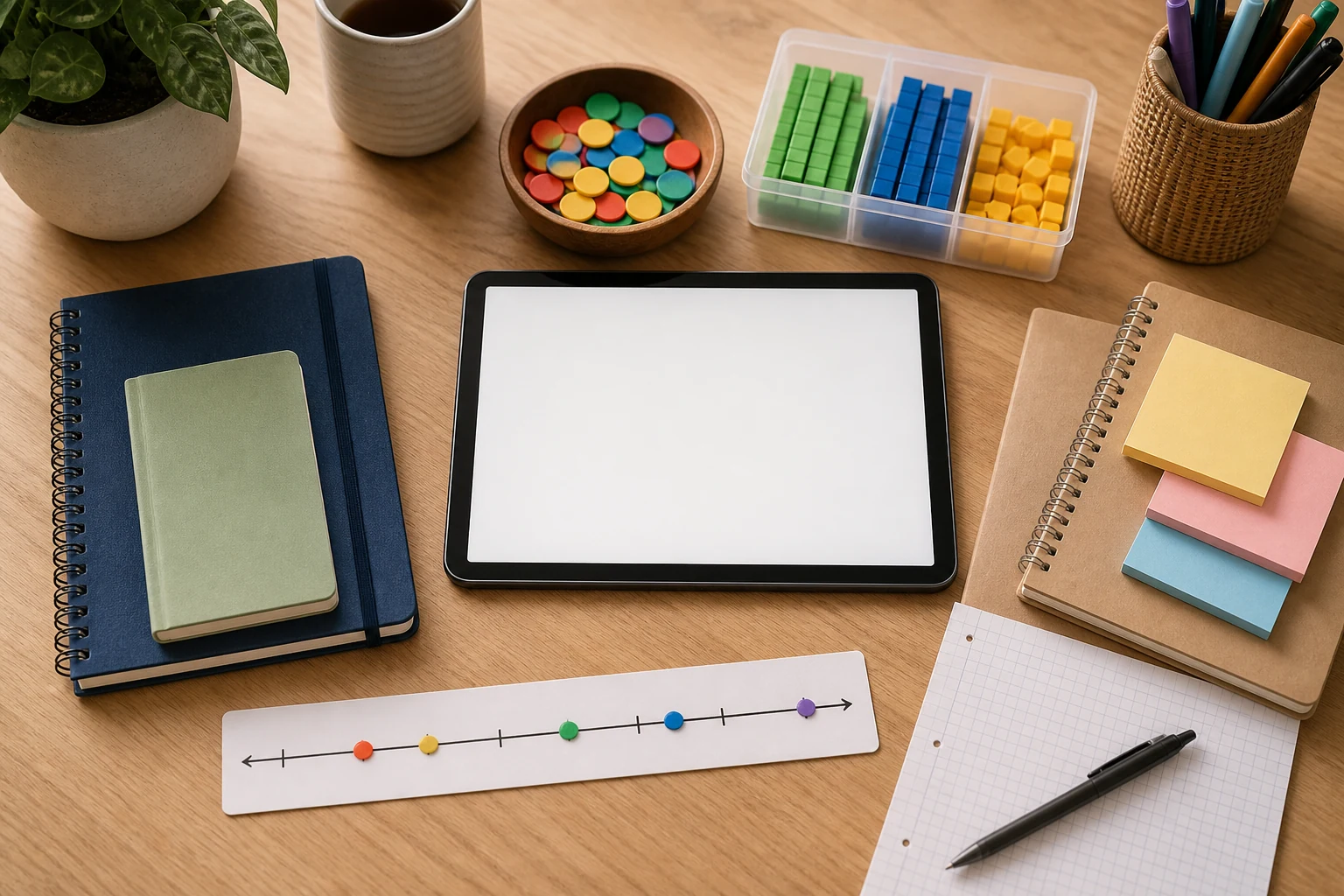
This guide explains how to choose dyscalculia resources for teachers, parents, and adults without chasing every worksheet, app, or PDF you find. It also shows where a dyscalculia test or screening fits in a responsible support plan: as an educational clue, not a label that replaces a qualified evaluation.
What Makes a Dyscalculia Resource Worth Using?
A good resource should reduce cognitive load. That means it makes numbers more visible, steps more predictable, and practice less punishing. Dyscalculia can affect number sense, arithmetic facts, sequencing, time, estimation, direction, and confidence. A resource that only asks for more speed or more memorization may miss the point.
Look for four qualities before you commit time or money:
- It makes quantity concrete with counters, number lines, base-ten blocks, visual models, or real-life objects.
- It breaks tasks into repeatable steps instead of assuming the learner can hold everything in working memory.
- It allows enough time for reasoning, checking, and correction.
- It protects confidence by treating mistakes as information, not proof that someone is lazy or careless.
For children, the best resource is usually used with an adult who can model thinking aloud. For adults, the best tool may be a calculator, budgeting template, calendar reminder, or visual planning system that removes unnecessary number strain. For teachers, the best resource is often a structured routine that can be repeated across lessons.
Dyscalculia Resources for Teachers
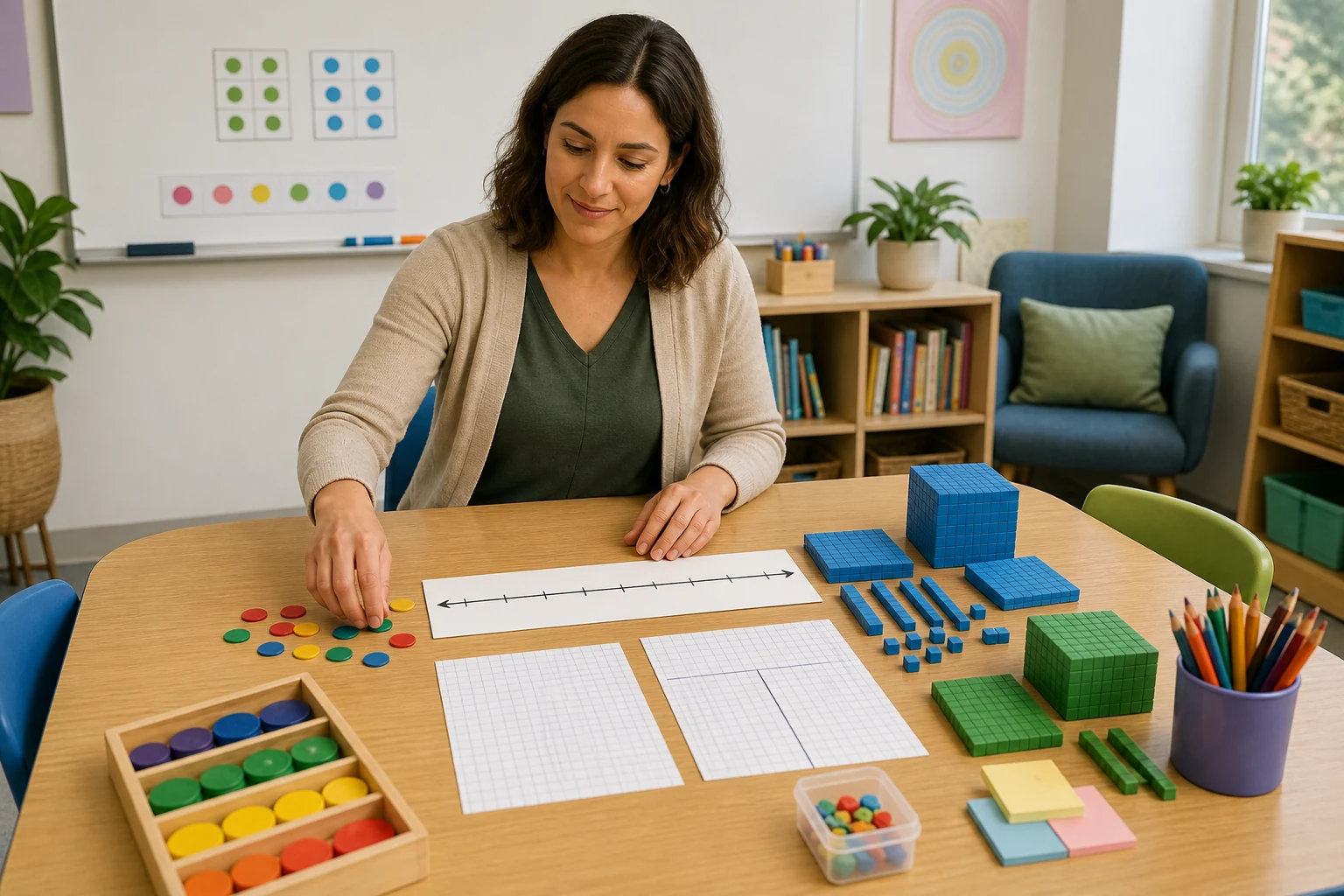
Teachers usually need resources that work in a busy classroom, not materials that require a complete redesign of every lesson. Start with supports that make math visible and sequential.
Concrete manipulatives are useful because they connect symbols to real quantities. Counters, cubes, bead strings, fraction strips, and base-ten blocks can help students see what numbers represent before they are asked to manipulate abstract notation. Graph paper can keep columns aligned. Number lines can support counting, comparing, adding, subtracting, elapsed time, and negative numbers.
Printable supports can also help, especially when they are short and consistent. If you are searching for strategies for teaching students with dyscalculia PDF materials, prioritize one-page checklists, worked examples, visual vocabulary cards, and step-by-step problem frames. Avoid long packets that simply add more practice without changing how the learner accesses the concept.
Teachers can also adjust instruction without lowering expectations. Useful changes include:
- pre-teaching math vocabulary before word problems;
- allowing calculators when computation is not the target skill;
- giving extra time for tests or timed tasks;
- using color to separate steps in multi-step problems;
- checking understanding after each step instead of only at the final answer;
- offering oral explanation, drawing, or manipulatives as ways to show reasoning.
When a student seems to avoid math, the resource may need to address anxiety as well as skill. A calmer routine, predictable layout, and private error correction can make participation easier. A teacher who wants an accessible entry point can pair classroom observations with visual math support tools to explore number lines, place value ideas, and gentle screening context.
Dyscalculia Resources for Parents
Parents often search for dyscalculia resources because homework has become stressful. The goal at home is not to become a specialist overnight. The goal is to make daily number tasks safer, slower, and easier to discuss.
Start with observation. Which tasks cause the most friction: counting money, reading an analog clock, remembering math facts, estimating time, lining up numbers, following multi-step directions, or solving word problems? A resource is more likely to help when it targets the exact task, not a vague sense that math is hard.
For younger children, use short, concrete practice:
- count real objects while setting the table;
- compare quantities with snacks, blocks, or coins;
- use a number line for board games and simple addition;
- cook with measuring cups to explore fractions;
- practice time with routines rather than isolated clock worksheets.
For older children and teens, home support may look more like organization. Keep a formula card, a homework checklist, a calculator for non-target computations, and a worked example nearby. Ask the teacher which skill is being assessed so you do not accidentally spend all the child's energy on handwriting, copying, or speed.
The most important parent resource is language. Instead of saying, "You know this," try, "Let's find the step that got crowded." Instead of pushing harder when frustration rises, pause and return with a visual model. Children with dyscalculia may already carry shame about math. A calm adult can make support feel like teamwork rather than correction.
Dyscalculia Resources for Adults
Adults with dyscalculia often need resources that respect real life. The challenge may appear in budgeting, estimating travel time, reading schedules, splitting bills, using measurements, remembering PINs, or managing workplace data. Adult resources should therefore be practical, discreet, and easy to repeat.
Helpful dyscalculia tools for adults may include:
- calculator apps with history so you can review steps;
- visual budgeting templates with categories and color coding;
- calendar alerts for time blindness and task transitions;
- mapping tools for directions and distance estimates;
- recipe scaling tools for cooking;
- spreadsheet templates that reduce manual calculation;
- checklists for repeated tasks such as invoices, tips, or medication timing.
Adults may also benefit from accommodations in college or work settings. Examples can include extra time, written instructions, access to a calculator, reduced mental arithmetic demands, or alternative ways to demonstrate competence when math speed is not central to the role. The right support depends on the setting, so it is usually worth documenting patterns and discussing options with a qualified professional, disability support office, or workplace support contact.
One caution: avoid resources that promise a single fast fix. Dyscalculia support is usually about building understanding, choosing compensatory tools, and reducing unnecessary barriers. Progress can be real without being instant.

Dyscalculia Intervention: What Support Can Include
Dyscalculia intervention is not one product. It is a plan that combines assessment information, explicit instruction, practice, accommodations, and emotional support. The most useful plans usually begin with the learner's current number sense rather than the grade-level topic everyone else is studying that week.
Effective support often includes:
- explicit teaching of quantity, magnitude, place value, and number relationships;
- multisensory practice using movement, touch, speech, and visuals;
- repeated routines for solving common problem types;
- spaced practice rather than long, exhausting sessions;
- strategy instruction for checking work;
- accommodations that reduce barriers while skills develop.
Intervention should also separate conceptual understanding from calculation load. For example, a student may understand how to compare prices but still make errors with subtraction. Letting that student use a calculator during a budgeting activity can reveal reasoning that mental arithmetic would hide.
If a learner is severely distressed, losing access to schoolwork, or struggling across daily tasks, screening resources should not be the final stop. They can help gather examples and guide questions, but formal educational or clinical evaluation may be needed to understand the broader learning profile and co-occurring factors such as ADHD, dyslexia, dyspraxia, or math anxiety.
How to Choose Digital Dyscalculia Tools
Digital tools can be helpful when they make math more visual, adaptive, and forgiving. They can also be frustrating if they rely on speed, noisy rewards, or dense screens. Before choosing an app or program, test it against the learner's actual needs.
Ask these questions:
- Does it teach number sense, or only drill answers?
- Can the learner slow down or repeat a step?
- Are visuals clear enough to reduce confusion?
- Does it show mistakes in a way that supports correction?
- Can an adult see progress without turning practice into pressure?
- Does it protect privacy and fit the learner's age?
For children, digital resources work best when paired with conversation and hands-on materials. For adults, a digital tool may be less about learning arithmetic and more about reducing everyday friction. A budgeting app, time timer, reminder system, or spreadsheet template can be a dyscalculia resource if it helps the person function with less mental strain.
Build a Resource Plan You Can Actually Use
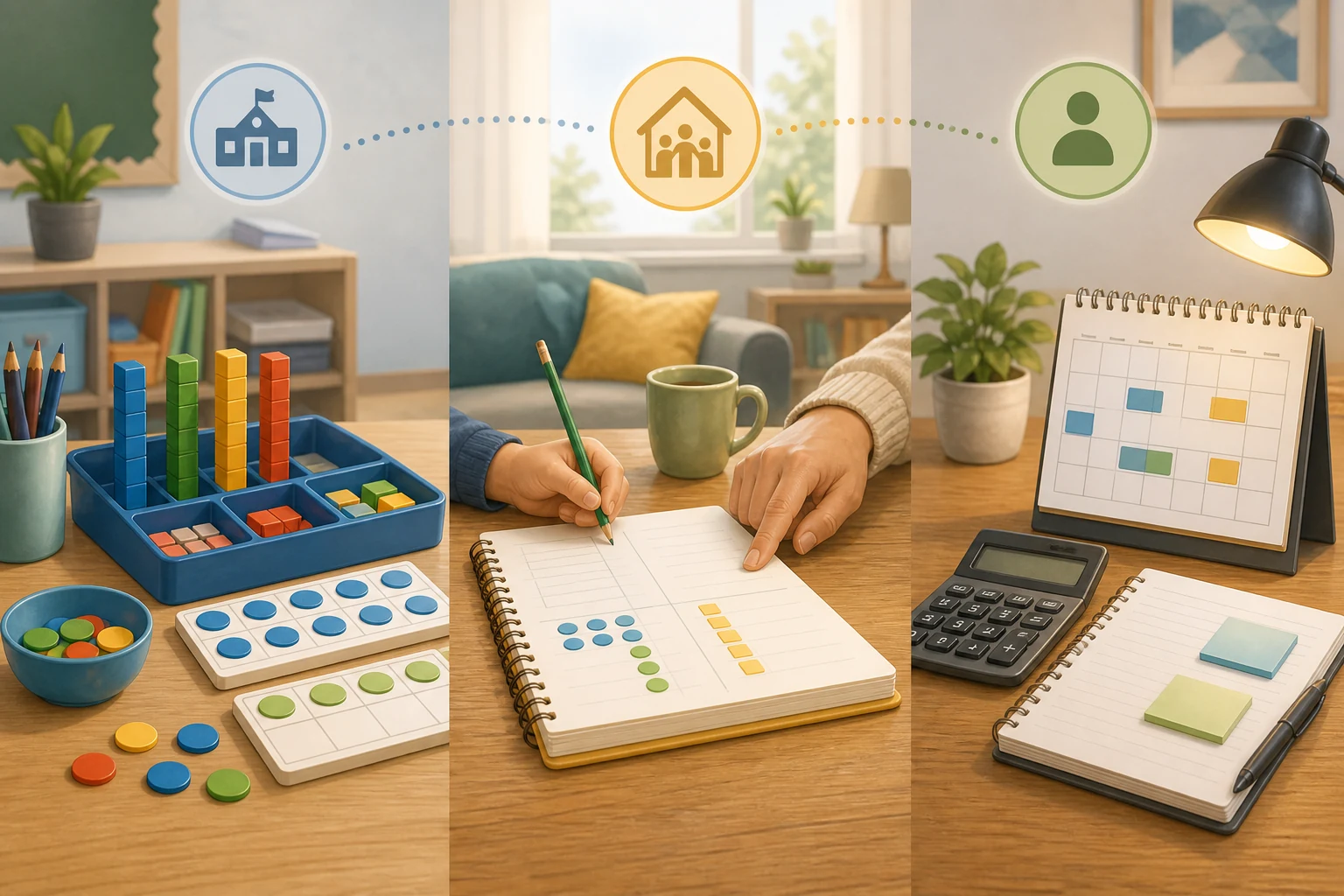
The most sustainable resource plan is small. Choose one support for understanding, one support for daily tasks, and one support for communication with school, work, or a professional. For example, a parent might combine a number line, a homework checklist, and a short observation log. A teacher might combine manipulatives, graph paper, and a step-by-step word problem routine. An adult might combine a calculator history, calendar alerts, and a budgeting template.
Review the plan every few weeks. Keep what reduces confusion. Replace what creates more work than relief. If you are unsure where to begin, an educational screening and resource site such as dyscalculia screening and resource hub can help you reflect on patterns, explore supportive tools, and prepare clearer questions for a qualified professional.
The aim of dyscalculia resources is not to make every number task effortless. It is to give the learner better access: more time, clearer visuals, less shame, and practical ways to participate in school, work, and daily life.
FAQ
Is dyscalculia a form of ADHD?
No. Dyscalculia and ADHD are different neurodevelopmental conditions. They can co-occur, and attention, working memory, or impulsivity challenges can make math harder. But dyscalculia specifically involves persistent difficulty with number-related learning and mathematical processing. If both seem possible, a broader professional evaluation can help clarify the pattern.
What can be done to help dyscalculia?
Support usually combines explicit instruction, visual models, concrete materials, accommodations, and emotional support. Helpful resources include number lines, manipulatives, graph paper, calculators, worked examples, time supports, and structured routines. The best plan targets the specific difficulty rather than adding more speed-based practice.
What is the best math program for dyscalculia?
There is no single best program for every learner. A strong program should teach number sense clearly, use visual and hands-on models, move step by step, allow enough time, and adapt to the learner's current skill level. For some people, a trained tutor or specialist is more useful than an app alone.
What are 10 symptoms of dyscalculia?
Common signs can include difficulty recognizing quantities, confusing math symbols, trouble remembering facts, slow counting, weak estimation, difficulty reading clocks, trouble with money, poor number alignment, confusion with directions or measurement, and strong anxiety around math tasks. These signs can have other causes too, so patterns over time matter.
How can parents help a child with dyscalculia at home?
Parents can use short, calm, concrete practice with everyday objects. Try number lines for counting, cooking for measurement, board games for quantities, and checklists for homework steps. Keep sessions brief, praise effort and strategy, and pause when frustration becomes the main event.
What dyscalculia resources are useful for teachers?
Teachers often benefit from manipulatives, graph paper, visual vocabulary, worked examples, step-by-step routines, calculators for non-target computation, and accommodations such as extra time. Consistent routines and private correction can also reduce math anxiety.
What dyscalculia resources are useful for adults?
Adults may use calculator history, budgeting templates, calendar reminders, mapping tools, recipe scaling tools, spreadsheet formulas, and written checklists. The goal is practical access to daily tasks, not proving that every calculation can be done mentally.