Math for Dyslexia: Is It Actually Dyscalculia? Signs & Solutions
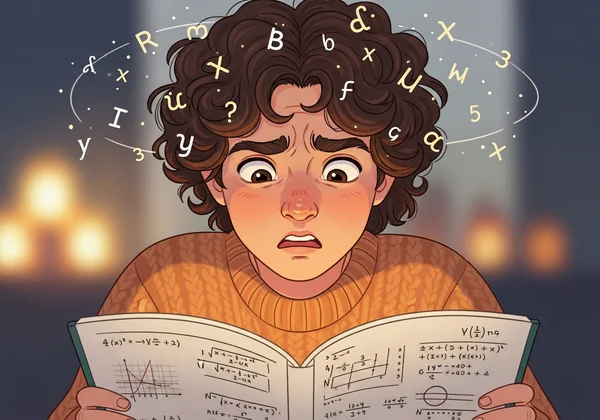
Math can feel like an impossible puzzle when symbols dance on the page or numbers refuse to stay in your head. If you or your child already manages reading challenges, you might wonder if there is such a thing as math for dyslexia. Is the struggle with equations just another side effect of reading difficulties, or is it something else entirely?
You are not alone in this confusion. Many people assume that if they have dyslexia, their math struggles are just part of the package. However, the reality is often more nuanced. While language processing issues can certainly make math harder, there is a distinct condition—often nicknamed "math dyslexia"—that requires its own set of strategies.
In this guide, we will untangle the differences between reading and math learning disabilities, identify the specific signs to watch for, and provide actionable strategies to help. If you are unsure whether these challenges are due to dyslexia or a specific number-based issue, taking a simple online dyscalculia test can be a helpful first step in understanding your learning profile.
Is "Math Dyslexia" a Real Thing? (Clarifying the Terms)
When you type "math for dyslexia" into a search engine, you are likely looking for a name for the frustration you feel during math class. While "math dyslexia" is a very common term used by parents and students, it is not an official medical diagnosis.
Why People Call It "Math Dyslexia"
People use this term because the experience feels similar to dyslexia, just with numbers instead of letters. You might reverse digits, forget sequences, or feel a "fog" when looking at a math problem. It’s an easy way to describe a learning barrier that affects mathematical processing.
Defining Dyscalculia: The "Number Sense" Difference
The correct clinical term for a specific learning disability in mathematics is Dyscalculia.
Unlike dyslexia, which primarily affects language processing and phonological awareness, dyscalculia affects number sense. This is the intuitive ability to understand how numbers work, compare quantities, and understand that the number "5" represents a group of five items.
However, the line isn't always clear. A student can struggle with math purely because of dyslexia (reading the instructions is hard), or they might have true dyscalculia. Understanding this distinction is vital for finding the right support.
The Hidden Link: How Reading Struggles Impact Math
You might be asking, "If I don't have dyscalculia, why is math still so hard?" The answer lies in how traditional math is taught and tested. Math for dyslexia involves navigating the heavy language load present in modern mathematics.
The Challenge of Word Problems (Language Processing)
For a student with dyslexia, a word problem is a double-edged sword. Before they can even attempt the calculation, they must decode the text.
- Decoding fatigue: By the time the student reads the sentence "If John has 30 apples and gives half to Mary...", their brain is already tired from the act of reading.
- Vocabulary gaps: Math has its own language (e.g., "quotient," "product," "difference"). If a student struggles to retrieve these word meanings, they cannot set up the equation correctly.
Working Memory: Holding Numbers in Your Head
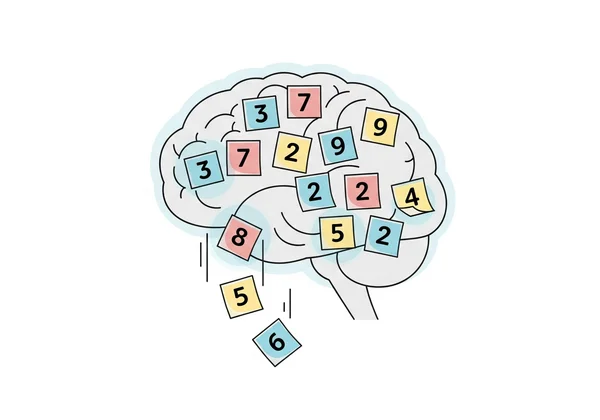
Dyslexia often impacts working memory—the brain's "sticky note" pad. Mental math requires you to hold a number in your head, perform an operation on it, and remember the new result. If your working memory is overloaded, those numbers simply vanish before you can write them down.
Sequencing and Logic: Getting the Order Right
Math is all about sequence. Steps in long division or the order of operations (PEMDAS) must be followed largely. Dyslexia can make sequential processing difficult, leading to steps being skipped or performed out of order, resulting in the wrong answer despite understanding the concept.
Dyslexia vs. Dyscalculia: Spotting the Differences
To get the right help, you need to know what you are dealing with. Are the errors caused by misreading the question, or by not understanding the numbers themselves?
Dyslexia Focus: Language & Decoding
If the primary issue is Dyslexia, you might notice:
- The student can do the math if the problem is read aloud to them.
- They struggle with word problems but excel at simple calculation sheets.
- They reverse numbers (writing 12 as 21) similar to how they reverse letters, but understand the value of the number.
Dyscalculia Focus: Quantity & Number Sense
If the issue is Dyscalculia, the struggle runs deeper than reading:
- The student counts on their fingers long after peers have stopped.
- They cannot instantly tell which of two numbers (e.g., 50 vs. 90) is larger without counting.
- They struggle to recognize patterns or estimate quantities (e.g., "How many marbles are in this jar?").
Can You Have Both? (The Comorbidity Link)
Yes, it is very common to have both. Research suggests that a significant percentage of people with reading disabilities also have math learning disabilities. This is known as comorbidity.
If you suspect you are dealing with more than just reading issues, looking into a comprehensive dyscalculia test online can help you tease apart these overlapping symptoms.
Common Signs: Are These Struggles Familiar?
Recognizing the signs of math for dyslexia (or dyscalculia) in daily life is often easier than spotting them on a test paper. These struggles often manifest in specific, recognizable scenarios.
Trouble with Symbols and Clocks
- The Symbol Mix-up: Consistently confusing addition (+) and multiplication (x) signs, or not knowing which symbol to use for "take away."
- Time Blindness: struggling to read an analog clock or having no sense of how long "20 minutes" actually feels.
Difficulty Estimating Costs and Time
- Shopping Stress: Being unable to estimate the total cost of a shopping cart items or struggling to calculate change.
- Budgeting Issues: As an adult, you might find it nearly impossible to manage a monthly budget because the numbers feel abstract and meaningless.

Persistent Anxiety Around Numbers
- The "Freeze" Response: When asked a math question, the mind goes completely blank. This isn't just nervousness; it's a neurological block.
- Avoidance: Going to great lengths to avoid situations that involve math, like splitting a dinner bill or playing board games that involve scoring.
Unsure of the Root Cause? Take a Closer Look
It is perfectly normal to feel confused right now. The symptoms of dyslexia and dyscalculia overlap so much—especially regarding working memory and anxiety—that it can be hard to tell where one ends and the other begins.
Why Clarity is the First Step to Improvement
Understanding the root cause isn't about labeling yourself or your child; it's about finding the right tools.
- If it's Dyslexia: You need text-to-speech tools and highlighted keywords.
- If it's Dyscalculia: You need visual aids, manipulatives, and graph paper.
Try Our Educational Screening Tool
If you want to gain more insight into your specific situation, we have developed a resource to help. It is designed to look at the specific patterns of math struggles that go beyond simple reading errors.
While this tool does not provide a medical diagnosis, it serves as a valuable educational step to see if your traits align with dyscalculia. Explore Your Traits to Start the Dyscalculia Screening.
Proven Strategies: Multisensory Math & More
Whether you are dealing with math for dyslexia or dyscalculia, the good news is that traditional rote memorization isn't the only way to learn. Multi-sensory approaches act as a "back door" to the brain, helping concepts stick.
Multisensory Learning: Using Manipulatives & Visuals
Stop trying to do it all in your head. Make math physical.
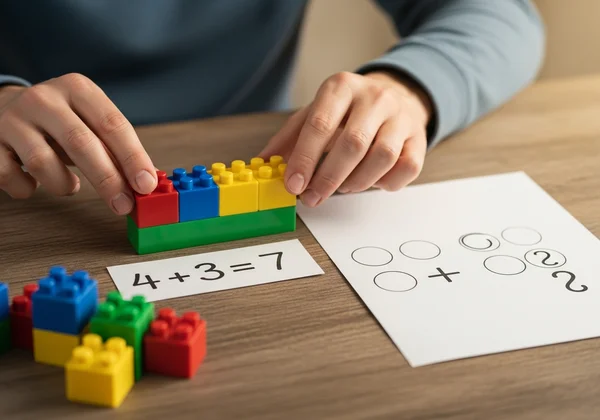
- Manipulatives: Use blocks, beads, or Lego bricks to represent numbers. Seeing that "5" is physically bigger than "3" builds number sense.
- Drawing: Encourage drawing out the problem. If the problem is about apples, draw circles.
Strategies for Tackling Word Problems
Since reading is the barrier here, bypass the block:
- The Highlighter Method: Read the problem once. Then, use a highlighter to mark only the numbers and the "action words" (like "gave away" or "total").
- Draw the Story: Translate the text into a comic strip or diagram. This moves the information from the language center of the brain to the visual center.
Classroom Accommodations You Can Request
If you or your child has a formal diagnosis or an identified learning difference, you may be eligible for accommodations such as:
- Graph Paper: Using graph paper instead of lined paper to help keep numbers aligned in columns.
- Reference Sheets: Having a multiplication table or list of formulas available during tests (to bypass working memory issues).
- Calculator Use: Allowing a calculator for checking work, so the focus remains on the concept, not the calculation.
Moving Forward: Support Starts with Understanding
Struggling with math for dyslexia does not mean you are "bad at math." It simply means your brain processes symbols and sequences differently. Many successful architects, engineers, and artists have dyslexia and have found ways to make math work for them.
The journey starts with identifying the specific hurdle. Is it the reading? Is it the number sense? Or is it a mix of both? Once you know the enemy, you can choose the right weapon.
Don't let the struggle define your potential. If you are ready to understand your unique learning profile better, try the dyscalculia test today and take the first step toward confidence.
Frequently Asked Questions
Can a person be dyslexic but good at math?
Yes, absolutely. Dyslexia primarily affects language processing. If a person's "number sense" (the ability to understand quantities) is intact, they can be excellent at higher-level math like geometry or calculus, even if they struggle to read word problems.
Is number reversal a sign of dyslexia or dyscalculia?
It can be both, but the cause differs. In dyslexia, reversing a number (like writing a 3 backwards) is often a visual-spatial processing issue similar to reversing letters (b and d). In dyscalculia, it might reflect a lack of understanding of place value (writing 31 instead of 13).
Do I have dyscalculia or just math anxiety?
Math anxiety is an emotional reaction; dyscalculia is a neurological difference. A good way to tell is to look at non-stressful situations. If you still struggle to estimate change or read a clock when you are calm and alone, it may be dyscalculia. If the skills are there but vanish during a test, it may be anxiety.
Is there a cure for math learning disabilities?
There is no "cure" in the medical sense because your brain structure is unique. However, with "intervention"—specific teaching methods like multisensory instruction—skills can improve dramatically. You can learn to master math, just using a different path.
Does dyslexia affect counting money?
It can, but usually indirectly. Dyslexia might make reading the values on coins or bills difficult (if they rely on text). However, struggling to calculate the total value or make change is more indicative of dyscalculia.